Showing posts with label urban planning. Show all posts

11.06.2013

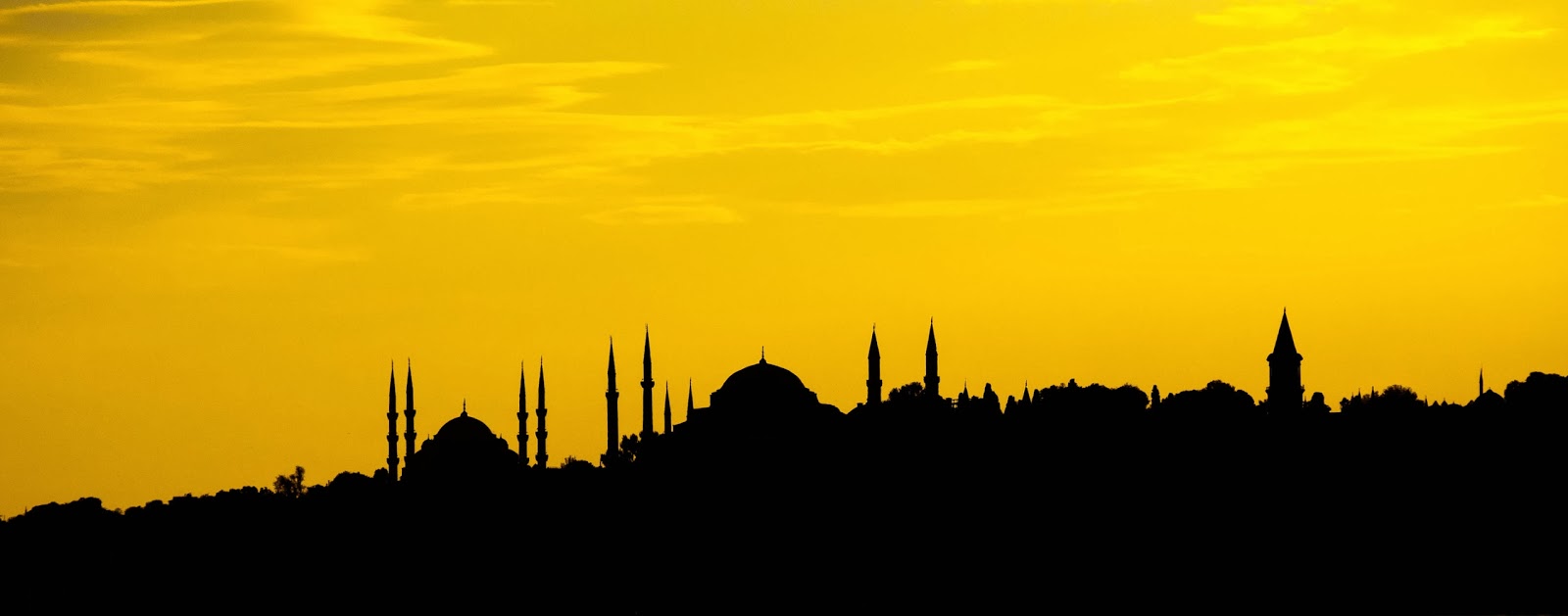
How Istanbul Found Its Melancholia: A Short Urban History


Unfortunately, our generation did not carry the valuable heritage that it inherited into the future. It may seem slightly extreme, but it was almost a betrayal. -- Recep Tayyip Erdogan, Aesthetic Cities conference, Istanbul, April 2013.

The story of Istanbul begins with the first storytellers. Greek settlers first dropped anchor at Chalcedon, on the Asian side of the Bosphorus, in 685 BC – though it may not have been the most promising locale. According to Greek lore, Byzas, a Megaran and the son of King Lisos, some years later asked the Oracle at Delphi where he should settle down and build his great city. He was given vague plans to look “opposite the land of the blind.”

Byzas sailed up the Aegean to where the Marmara Sea meets the Bosporus, spied Chalcedon and decided its settlers must have been blind to settle in a location so inferior to the one across the strait. There, on an acropolis surrounded by water on three sides – the Bosporus Strait to the east, the Golden Horn to the north and the Marmara Sea to the south – he founded Byzantium, in 657 BC.

Byzas secured his prize by building great stone walls around the promontory. The city flourished, taking advantage of the best natural harbor between the Atlantic and the Pacific and great incomes from trade, fishing and tariffs from boat traffic. All that lucre inspired Dionysian revelry among the people – “Byzantium makes all of her merchants drunkards,” the Athenian playwright Menander wrote – and a fetish for physical expressions of greatness.

In 196 AD, Roman emperor Septimius Severus expanded the city walls, erected a Hippodrome and laid a colonnaded Royal Path. Constantine the Great arrived in 324 and expanded the walls again. He also renamed the city in his name and built a forum, temples and palaces. A few decades later Theodosius built what came to be known as the Theodosian Walls, chunks of which remain standing today and are protected as UNESCO heritage sites.

The city stretched for miles, yet Istanbul had barely been born. Soon after Justinian dedicated the Hagia Sophia in 537, the great church was hailed as the architectural splendor of the world, inspiring jealousy in rival leaders. A thousand years later, when Sultan Mehmet II conquered Constantinople in 1453, he is said to have ridden directly to the Hagia Sophia and converted it into a mosque on the spot.

Mehmet II, known to Turks as Fatih (meaning “conqueror”), undertook the first of Istanbul’s many projects of urban regeneration, sprucing up the streets of the sagging capital and building the Fatih mosque complex, the origins of the Grand Bazaar, and Topkapi Palace, among other works.

The Ottoman era peaked in the mid-16th century during the rule of Suleiman the Magnificent, the longest-reigning sultan. He teamed with the famed Mimar Sinan (architect Sinan) to build Suleimaniye, still the city’s largest mosque and generally regarded as its most beautiful.

Sultan Ahmet I needed a dozen years to build the six-minaret Sultanahmet Mosque, also known as the Blue Mosque, and died a year after its dedication in 1616. Centuries of decline soon followed, during which the city’s center of gravity drifted across the Golden Horn, to Pera.

When Mustafa Kemal established the Republic of Turkey, in late 1923, he shifted the national capital, and the focus, to Ankara. Years later, just as he had embraced secularism and modernity for his country, he looked to the West to revive Istanbul and set it on a course for future greatness. In 1935, the French urban planner Henri Prost won a competition to devise a master plan for the city.

Prost, who had gained renown with his work in Fez, Marrakesh and Casablanca, re-envisioned Taksim as a central square with a broad green space. He demolished the Halil Pasha Barracks, which had been built in 1806 and turned into Taksim Stadium a century later, and remade the square. The Taksim we know today, complete with a monument to Ataturk and 30-acre Gezi Park, was completed in 1943.

By this time, a proud melancholy known as huzun had fallen over the city. “In Istanbul the remains of a glorious past and civilization are everywhere visible,” Nobel Prize-winning Turkish novelist Orhan Pamuk writes in his memoir, Istanbul. “No matter how ill-kept they are, no matter how neglected or hemmed in they are by concrete monstrosities, the great mosques and other monuments of the city…inflict heartache on all who live amongst them.”

10.18.2013

Recep Tayyip Erdogan, Master Urban Planner


Turkey’s long-serving prime minister has described his third term as that of an “usta,” or master, borrowing the term from the celebrated Ottoman architect Sinan in reference to the pinnacle of his career after apprenticeship and graduation.

But master of what, exactly? Erdogan never said. Politics? Governance? Conspiracy theorizing? It’s impossible to know for sure. Maybe he was referring to urban planning.

Istanbul is undergoing a slew of major projects that will change its very face in the years to come. Yet it is doing so without a master plan. Or rather, it has a master plan, but officials have decided to ignore it.

Going by his recent comments, Erdogan, native son and former mayor of Istanbul, believes he has a masterful understanding of urbanism and city design and is more than capable of remaking this city on his own.

“If we change our habits, the country, Istanbul, the environment and families will be able to mutually benefit,” Erdoğan said last week, pointing out that 350,000 new cars take to Istanbul’s already congested roads every year. “I hope that you will reconsider your relationship with your vehicles. A modern city is not one where the transport is mainly carried out by private vehicles, but one where it is operated by public vehicles.”

The government is implementing a series of billion-dollar projects that will very likely add to Istanbul’s pollution and sprawl and severely reduce its green spaces. The third Bosporus bridge, the new airport, a canal linking the Marmara and the Black Sea, and satellite cities on the Asian and European sides, for instance, all of which helped inspire the Gezi protests earlier this year.

The usta’s solution to over-population and urban sprawl is to build horizontally. “We have to attach importance to aesthetics,” he said in April. “You will tell me that 40 or 50 storey buildings can de aesthetic, too. They can, I won’t deny it. But humans should live near the soil.”

This must mean that Istanbul Sapphire, opened in 2011 and at 54 stories and 238 meters the city’s tallest building, doesn’t count. Nor does the vast sea of 12-story towers the government is building as part of the Kayabasi housing project.

“In many places, we consider the construction of tall buildings to be a talent, but I don't see it this way,” Erdogan said in a speech at the Justice and Development Party’s symposium on Livable and Aesthetic Cities, back in March. “People are becoming distanced from the land. Horizontal architecture should prevail."

He spoke of “stone and concrete” cities without “soul and direction.” “Now children cannot live their childhoods properly,” Erdogan warned. “We're building childhoods on concrete grounds. Let’s build them on grass.”

The prime minister then asked a pointed question. “Can a generation that has a relationship with nature only through books and cartoons and documentaries have a healthy spiritual view of the world and the future?” Erdoğan wondered. “People don't shape cities. On the contrary, cities shape people.”

There are the words of Tayyip Erdogan, urban planner, and they generally ring true. This Istanbullu just wishes the prime minister were able to put his money where is mouth is.

“Misguided urbanization has been a part of daily life since early years of the new republic,” writes Today’s Zaman columnist Bulent Kenes. Actually, it goes back much further, to the days of Constantine and Theodosius. Istanbul seems to inspire visions of planning grandeur in its leaders. Great for them; not so much for residents, or the city itself.

8.26.2013

How One Istanbul Filmmaker Foresaw the Gezi Protests


As summer winds down and the Turkish government warns of a “hot autumn” of protest, this seems a good time to look back at the roots of Gezi frustration and ahead to a remade political landscape.

One sunny summer day in Istanbul, a woman stood before an animated crowd of protesters, many holding placards denouncing their government’s heavy-handedness. “Against the forces that create divided and unsafe cities, against the usurpation of our right to the city and for the right to shape our city ourselves,” she said to the crowd, “we declare that we’ll stand united, moving beyond all our differences.”

This seems an apt mission statement for the three-week occupation of Gezi Park earlier this year, a happening hailed by many Turks as an unprecedented moment of unity -- when Islamists and nationalists, religious and ethnic minorities and football fans of all stripes stood together against their government.

But the woman, Cihan Baysal, spokesperson for Urban Movements Istanbul, was speaking not just a few months ago, when protests swelled in Istanbul and spilled across Turkey, but in the summer of 2010.

This is a scene from Ekumenopolis: City Without Limits, a 2011 documentary about the city’s problematic transformation that seems to capture an iconic Istanbul uprising that had yet to happen. “Maybe I smelled it or something,” says the filmmaker Imre Azem, sipping tea on a bright, humid day in a park along the Bosporus. “Maybe it was a feeling. I don’t know. But to me it was obvious once I did the research that these urban issues would become the centerpiece of a social movement.”

Born in Istanbul, Azem studied political science and French literature at Tulane University, in New Orleans, before moving to New York City to work for a magazine. In 2003, prodded by what he saw as the injustice of the US invasion of Iraq, he and a friend began making a documentary linking that war to Western colonialism in the region. “We didn’t finish the film, but we learned filmmaking,” said Azem. “I really got a taste for documentaries.”

He saved some money and moved back to Istanbul in 2007 to start work on a film critiquing the global economic system through the problems of Istanbul. He cast about for the right approach, working odd jobs for a couple years, until lightning struck in 2009.

“One day I was listening to the radio and heard a story about the third bridge,” said Azem, referring to the third bridge over the Bosporus, following the first two built in 1973 and 1988. “I had never heard any public discussion of this project, so I started researching it.”

The bridge, to be built near the northern, Black Sea end of the 19-mile-long Bosporus, had initially been proposed during the mid-90s mayoralty of Recep Tayyip Erdogan, who at the time said it would be “murder” to the city.

Istanbul planners agreed, pointing out that the construction area covers forests and water reservoirs the city needs to survive. But as prime minister, Erdogan has spearheaded the project, which began construction on May 29, a day before the Gezi protests exploded.

“Everybody I spoke to said it’s a disastrous project, and that no one is really looking at the effects,” Azem continued. “More importantly, I learned that this is actually part of a much bigger plan, a much broader vision for Istanbul that includes all the urban transformation issues, all these other mega-projects. So I decided to make the film about not just the third bridge, but about all this, making connections between these issues.”

The film opens with one shot after another of Istanbul’s vast, repetitive sprawl, as a narrator likens the 19th century modernization of cities in the West to 21st century urbanization in the developing world. Azem details the destruction of old Istanbul neighborhoods and the mostly failed relocation of their residents before widening his lens to consider the third bridge, other mega projects and the city’s recent economic history. The film makes a convincing argument that the current leadership has put Istanbul in peril.

"With the new convention centers, sports and cultural centers that we're building, we're preparing the way for a modern future on a historic foundation," Erdogan says in the film. "At the same time, we're investing to turn Istanbul into the financial center of the world."

Writing about Ekumenopolis last year, the Turkish daily Today’s Zaman called it “a remarkable cinematic effort,” that “is also one of the most socially and politically pertinent works of our times.”

That pertinence exploded into view this past spring, when a small protest to halt the uprooting of a few trees mushroomed into a movement. Azem was at Gezi Park from the first night, sleeping in a tent with a handful of activist friends.

Abetted by over-aggressive police and security forces, their little demonstration soon blossomed into a nationwide movement against the government. By July, six people had been killed, including a police officer, and thousands injured in the crackdown.

Yet as Azem well knows, local concern about Taksim had been brewing for some time. Starting in mid-2011, when the government announced its plan to remake Taksim Square, several movements emerged to protect the square and highlight urban issues in Istanbul, including Taksim Solidarity and Urban Movements Istanbul. One event in January 2012 even included a discussion at Gezi Park about how “Istanbul Claims its Right to the City.”

“Even as a person struggling for social rights, who made a film about this and had been involved in the struggle for five years, I didn’t expect such a huge response,” said Azem, who believes the political ground has shifted leading up to local elections next March. “The Gezi resistance has sent a message, not only to the AKP, but to the whole established political system. The message is that this system of parliamentary democracy is not representing the will of the people.”

7.12.2013

The Madness of Sultan Tayyip


ISTANBUL -- May 29 is an historic date for Turkey, and particularly for this eternal city on the Bosphorus. On that day in 1453, Sultan Mehmed II, known to Turks as Fatih (the Conqueror), took Constantinople from the Byzantines, launching a Turkish reign that continues to this day.

Exactly five hundred sixty years later, a few miles north of where Mehmed II built a castle in preparation to take the city, Prime Minister Recep Tayyip Erdogan turned up at a pomp-filled afternoon event along the Bosphorus to launch a grand and controversial infrastructure project – and his own political decline.

Growing up a dozen miles away in Kasimpasha, a conservative, working class district on the north bank of the Golden Horn, Erdogan earned a reputation as an indomitable brawler. This take-no-prisoners persona propelled his political rise, into office as mayor of Istanbul in 1994, and, nine years later, prime minister.

After a decade of strong economic growth, today's Turkey is brash and influential, much like its leader. Istanbul, the country’s cultural capital and economic engine, has developed into a tourist mecca and go-go metropolis of 15 million, where jackhammers, scaffolding and construction cranes are as familiar as the city’s Virginia Slim minarets.

But now the lord of the realm appears to be fighting an army of ghosts in addition to the usual suspects. That groundbreaking ceremony, for a third bridge across the Bosphorus, presented a trio of offenses that pushed public ire beyond the breaking point. The $3 billion project will require the razing of one of Istanbul's few remaining forests and is going ahead despite the opposition of environmentalists, urban planners and the Istanbul master plan.

During the event, officials announced that the bridge would be named after Yavuz Sultan Selim, a 16th century Ottoman ruler. Selim the Grim, as he's known, is remembered by Alevis -- a moderate Islamic minority of about 15 million people in Turkey, or 20 percent of the population -- as responsible for their mass slaughter. Selim is no hero to progressives either: in 1515 he made printing, a recent invention at the time, punishable by death.

Finally, after finishing up his remarks on the bridge, Erdogan directed a few words to a small band of demonstrators that had refused to give ground that morning to bulldozers attempting to uproot a handful of trees and begin construction on a replica barracks and mall project in Taksim, Istanbul's central square. “Do whatever you want,” said Erdogan, more paternalist than pugilist. “We have made our decision on Gezi park.”

“That really pissed people off,” said Imre Azem, the director of Ekumenopolis, a 2011 documentary about urban transformation of Istanbul. Azem was among the first handful of campers at Gezi Park the night bulldozers first arrived, Monday May 27. “So a lot more people came, and then there was the first dawn operation, at 5am Thursday, and after that it got huge."

We all know what came next: the government's harsh crackdown on Gezi demonstrators sparked mass protests in dozens of cities across the country, resulting in thousands injured and arrested and at least five people killed. The question now is whether all these events might lead to Erdogan’s demise. In a way, they already have.

Rather than cowing their leader, the mass protests have exposed his tin ear and stoked his inner despot. In a midnight session this past week, parliament passed a bill that castrates the country’s leading body of architects and planners (Chamber of Turkish Engineers and Architects), handing to a government ministry the chamber's ability to review major urban projects and issue permits and visas.

This is a direct affront to the Gezi protest movement, which was at root a fight against authoritarianism and government-controlled urban development. The new policy will essentially allow development by fiat, leading to more third bridges, more Gezi Parks, and more public protest. Instead of offering a solution, Erdogan has presented the protest leaders his middle finger.

What’s more, as a result of financial and monetary instability sparked by the protests, Ankara has launched investigations into financial market dealings with foreigners, and more recently into capital markets and its foreign exchange deals. These beg the question, why would a leader whose considerable reputation rests largely on a decade of economic dynamism (in addition to the shackling of the military) endanger the country’s credit rating and potentially scare off foreign investment? Why would Erdogan put Turkey’s great 21st century growth story at risk? His nature.

When cornered, a brawler tends to keep fighting. “Some people are saying I'm too rough," he said in June, referring to his response to the protests. "I'm sorry. This Tayyip Erdogan is not going to change." If he had been a bully before, post-Gezi Erdogan seems a modern-day Selim the Grim, with a dash of the madness of King George.

"Social media is the worst menace to society,” he said during a TV interview, despite the fact that his official Twitter account has more than 3 million followers. He blamed the protests on the international media, foreign extremists and an insidious "interest-rate lobby," among others, and said the same forces were behind the recent protests in Brazil. “The same game is being played in Brazil,” Erdogan told a rally of his supporters in Samsun. “They are controlled from the same center."

Unaware of the irony, Erdoğan urged Alevis, who have led the protests in many cities, not to be provoked by the efforts of the main opposition party. "Right now, the owners of the TV channels and newspapers that provoke the Gezi events, those who want to pour Alevis onto the streets, are all members of the [opposition] CHP,” he said.

The most troubling sign may have come this week, when he named Yigit Bulut, a TV personality who worries that world powers are trying to kill the prime minister via telekinesis, as a top economic adviser.

Leaders of Turkey have rarely wanted for foils or been big on checks and balances, but Erdogan’s decade in power appears to have warped his understanding of his position, and of democracy itself. A couple months ago he was at his peak, angling to rewrite the constitution, install a French-style presidential system and remain in office until the 100th anniversary of the republic in 2023. That scheme is now in tatters, and every move he makes seems dubious, from his protester conspiracy theories to his fumbled Syria policy and his government's confused, confusing response to the ouster of Mohamed Morsi in Egypt.

The government's response to the Gezi Park protests appears to have reduced public support for the the prime minister. A survey released in June found that Erdogan’s job approval ratings had fallen more than 10 percent since April, while support for the AKP had dipped one percent. Looking longer term, the very commercialization and urbanization Erdogan has ridden to economic glory has drawn millions of Turks to the cities, creating a more informed, urbane populace and perhaps starting to erode his largely rural, conservative base.

Still, there’s no reason to expect the AKP to fade from Turkish politics anytime soon. Millions of supporters still respond to the snap of Erdogan's fingers, but his stranglehold on national power has slipped. He's lost the political deftness that propelled his rise and, with elections looming next year, is barred by AKP rules from running again for prime minister.

The auspicious date of the third bridge groundbreaking was surely no accident. Erdogan has repeatedly linked himself to grand Ottoman-era rulers, such as with the opening of the Panorama 1453 Museum a few years ago. His visions -- the third bridge, the Marmaray rail tunnel under the Bosphorus, the world's largest airport, the $2.6 billion financial center, the Camlica Mosque -- might all be viewed as efforts to leave his mark on the former Constantinople.

But now that conquest has been slowed, along with Erdogan's political career. He'll still rank among the best leaders the republic has had, but his dream of becoming a modern-day Fatih or a second Ataturk will remain just that. The debate about whether he's lost his marbles will likely rage for some time, but for Sultan Tayyip, the end is nigh.

6.27.2013

The Other Winners from Gezi Park: Urbanists Everywhere


After five days of battling police forces, Taksim Solidarity, a collective formed by protesters in Turkey’s largest city and dedicated to advocacy for the threatened green space of Gezi Park, finally listed its demands Monday night: That Gezi Park remain a park; officials involved in the recent police aggression are forced to resign immediately; tear gas bombs banned; all jailed protesters released; and demonstrations allowed throughout Turkey.

As of Tuesday, protests have flared in dozens of cities across the country, and at least 1,700 people have been arrested, hundreds injured and at least two killed, with a handful in critical condition. Just today, a 240,000-member workers union began a two-day nationwide strike to protest the police’s excessive use of force. Why the sudden mass support? “This is not about a park,” read a leaflet circulated online. “This is about democracy.”

It may have begun with the Emek Theatre, a century-old Istanbul cinema torn down by the municipal government to become a mall six weeks ago. Or with the way the ruling Justice and Development Party (AKP) rushed to pass a restrictive new alcohol law last month. Or the way Prime Minister Recep Tayyip Erdogan defended it, saying the previous laws on alcohol had been created by “two drunkards” (likely referring to the beloved founder of modern Turkey, Kemal Ataturk, and his comrade-in-arms Ismet Inonu, the country’s second president), while his new version was “commanded by religion.” It might have started with the government’s long-running crackdown on domestic media and freedom of expression, or its decision to eschew a master plan for Istanbul.

Whatever the case, by this past weekend, when a demonstration to save one of the few remaining green spaces in central Istanbul exploded in a matter of hours into a visceral national movement, it was clear that Turks had had enough of the AKP’s authoritarianism. Catalyzed by an unwanted makeover of public space, Istanbul residents demanded a say in the governance of their country and the development of their urban environment. A small group of determined urban activists transformed a local effort to “save the trees” into a call heard around the world to “reclaim the streets, and the country.”

Just a month ago, Erdogan was at the peak of his power, plotting to rewrite the constitution and transform the government to install a French-style presidential system. After a decade of strong economic growth, Turkey is brash and influential, much like its leader. Istanbul, the country’s cultural capital and economic engine, has developed into a tourist mecca and go-go metropolis of 15 million, where jackhammers, scaffolding and construction cranes are as familiar as the city’s cigarette-slim minarets.

Istanbul is only 1.5 percent green space, compared to 17 percent in New York City. The city’s central area of Beyoglu is particularly nature-free. At the northeast rim of Taksim Square, Gezi Park may be unkempt and little appreciated, but it is also one of the few remaining areas with trees in the district. On top of that, in a city suddenly filled with swank shopping destinations, it was slated to become yet another mall.

“Just like our ancestors, we are continuing to write history and leave behind creations,” Erdogan said at a groundbreaking ceremony for a $3 billion bridge over the Bosporus last week. The bridge, to be completed in 2015, is named after 16th century Ottoman conqueror Yavuz Sultan Selim — the man widely seen as responsible for the slaughter of Alevis, a moderate Muslim people that today makes up some 15 percent of Turkey’s population of 75 million. “This is how we are building a powerful Turkey,” Erdogan added. “For the seven hills of Istanbul, we have seven grand projects — one is this bridge, a third necklace over the Bosphorus.”

Other Erdogan-backed projects in the works for Istanbul include the world’s largest airport, the city’s largest mosque on a hill overlooking the Bosporous, and a project to carve out a Suez Canal-style waterway to the west of the city, linking the Marmara to the Black Sea — a project the prime minister himself has called “crazy.” Thus far, the government has made all the decisions about these projects with little to no public discussion.

The third bridge had long been opposed by progressives and environmentalists because its anchors were to be built in some of Istanbul’s last great swathes of green, not far from the Black Sea, and the expectation was that the resulting traffic would doom those areas to smog and sprawl. Yet the government, led by Erdogan’s AKP, went ahead despite the opposition. Again, residents were not consulted.

Other troubling government actions in Istanbul include the following: Mass evictions of low-income residents to make way for renewal in tumbledown Istanbul districts like Sulukule, Tarlabasi and Zeytinburnu; the stoppage of May Day activities in Taksim Square by cutting ferry, bus and metro service in the area and sending out tens of thousands of policemen to apply liberal doses of teargas; and the evisceration of Taksim, the heart of the city and the site of a constant stream of smaller protests in recent years.

Several dozen protesters took to the park early last week and refused to vacate to allow for demolition. In response, Erdogan underestimated the people’s frustration and overestimated his own power. “Do whatever you want,” he said. “We have made our decision on Gezi park.”

Police came to retake Gezi Park at dawn last Thursday, burning tents and applying teargas, pepper spray and the occasional beating. The protesters scattered but soon returned. After authorities again forcibly evicted the demonstrators the following morning, protesters returned in greater numbers and spread details of the attacks via social media.

With the national media cowering, much of the news about what came to be known as Occupy Gezi has spread, particularly in those first few days, via Twitter and Facebook. One photo from last Thursday — of a smart-looking woman in a red dress, white handbag slung over her shoulder, all but ignoring a policeman’s aggressive pepper spraying — became a symbol of protesters’ defiance.

Woman in red becomes leitmotif for Istanbul’s female protesters. Credit: Photo by Osman Orsal. Reuters.
Other widely circulated images included a gas-masked whirling dervish protester and, not surprisingly, some nasty head wounds. Protesters in Turkey have flooded networks with up to 100,000 tweets an hour, directing each other to hotspots, calling for media coverage and highlighting authorities’ acts of violence. They used the crowdfunding site IndieGoGo to raise more than $80,000 for a full-page ad in the New York Times.

Not all the protesters have been angels. They set dumpsters on fire, graffitied walls, smashed windows, looted shops and burnt cars. Some used small makeshift weapons. But the vast majority has been peaceful, and Sunday morning many of them worked together to clean Gezi Park.

Erdogan, yet to respond to the demands of Taksim Solidarity while on a state visit to North Africa, seems to have turned into a modern-day Selim the Grim. “There is now a menace which is called Twitter,” he said during a TV interview Sunday, echoing dictators everywhere. “To me, social media is the worst menace to society.” The following day, as Turkey’s stock market took its biggest tumble since Erdogan came to power, he blamed the protests on “extremist elements” and said intelligence agencies were looking for a foreign hand. He also said, “anyone who drinks is an alcoholic” and threatened to meet the protesters’ numbers with more of his own.

Solidarity from Zuccotti Park to Gezi Park. Occupy Wall Street and members of New York City’s Turkish community picketed the Turkish consulate in New York Street on June 3. Credit:Michael Fleshman on Flickr
Leaders of Turkey have never been big on checks and balances, but Erdogan’s decade in power seems to have warped his understanding of his position and of democracy itself. Perhaps it’s not surprising. Growing up in conservative, working-class Kasimpasha, Erdogan earned a reputation as a take-no-prisoners brawler. Rather than negotiate or surrender when cornered and losing control, a brawler keeps on fighting, clinging to the feisty, indomitable attitude that put him on top. He has let go of his mall plan for Gezi, but suggested he might build a mosque in its place.

With the prime minister the clear loser, the big winners from the past week are President Abdullah Gul, who has hit many of the right notes in responding to the protesters and who seems to have opened a rift between himself and the suddenly out-of-touch Erdogan; Turkey’s youth, who now have a much greater understanding of their power; and Istanbul, the city Mehmed II conquered so many years ago has discovered, once again, that it is unconquerable, and largely able to control its own destiny.

And one more, outside Turkey: The international urbanist community, which has a new, tone-perfect example of how concerns about public space can spur greater, broader calls for democracy and basic rights, and how people everywhere are equally willing to fight for some measure of control of their parks, neighborhoods and built environment.

Due to its still-considerable support, there’s no reason to expect the AKP to fade from Turkish politics anytime soon. But Erdogan’s stranglehold on national power may continue to slip with more clashes in the days to come. As I write, reports are flooding in of more teargas in Ankara, Antalya and other cities, while thousands of Istanbullus head toward Taksim Square early Tuesday evening. Once more unto the breach.


Story originally ran at NextCity.org, on June 5th 2013.

5.21.2012

Rise of the Temporary City


by David Lepeska

for Atlantic Cities


While artists, activists and event organizers have embraced the pop-up phenomenon, urban visionaries have remained overwhelmingly concerned with permanence.

That may be changing, according to The Temporary City, a new book by urban planner Peter Bishop and environmental scientist Lesley Williams that outlines a greater appreciation for immediate outcomes and temporary activities among planners, architects, developers and city officials.

“An alternative approach to master planning is beginning to emerge,” the authors write.

Temporary uses are nothing new. Nearly all of the 200 buildings of Chicago's magnificent 1893 White City came and went within a few years.* And the reclaiming of public space has been going on for more than half a century, in free zones like Copenhagen's Christiania, a squatters' settlement founded in 1971.

The continuing economic crisis has curtailed development funding and increased unemployment, particularly among the young and educated. Many cities have lost sizable chunks of population, leading to vast swathes of vacant property. And today's constant communications capabilities have made organizing events much simpler and quicker.

Combine these with the appeal of time-limited exclusivity and you have a boom in pop-ups, like the recent weekend-long mall on Cambridge's Newbury Street, or the 10-day food truck park, with furniture, plants and a performance space, in Surrey, England.

These enrich urban life, acknowledges Bishop, but it's the grander, longer-lasting temporary projects that have begun to alter thinking in the field. Eric Reynolds of Urban Space Management created London's Camden Lock Market a few decades ago. Initially a group of temporary cart stores and retail outlets in and around vacant warehouses, it has since become one of the city's most popular markets and helped rejuvenate an overlooked neighborhood.

At Boxpark, in London's Shoreditch neighborhood, sixty shipping containers have been turned into shops with three or five-year leases. Opened in November 2011 on a site that is expected to be under construction by 2016, it's been called the world's first temporary mall, and exists in large part due to the open-mindedness of the landowners.

In 2010, the British magazine Property Week created a national campaign with the Meanwhile Project to find temporary uses for vacant sites and buildings affected by the downturn. Landowners and developers have learned that temporary uses can establish place and brand very early, increase property value, reduce or eliminate security costs, create a revenue stream and launch a key conversation. “It allows you to start a constructive dialogue with a neighborhood, and you can use that to remove some of the long-term risks to your proposals,” says Bishop, who created London's design and planning office in 2006 and now works as a director at Allies and Morrison.

Architects and planners are moving in a similar direction. London-based Tim Pyne Associates has designed the m-hotel, a stackable series of 500 square foot steel-framed living spaces for use on vacant sites for up to 10 years. And a book published last October, Temporary Architecture Now! adds Pritzker winners Jean Nouvel, Rem Koolhaas, and Zaha Hadid, among others, to the trend.

Even long-term master planning has been altered, as in London's Royal Docks project. What began as an ambitious, hundred-million dollar development required rethinking after the 2008 downturn. As deputy chief of the London Development Agency at the time, Bishop helped recalibrate the plan to incorporate temporary uses, including a retail caravanserai and a honey farm, as catalysts for a new long-term vision.

Such adaptation could proliferate. Architect Magazine says the many massive stalled development projects across American cities "resemble lunar craters, spreading over entire city blocks." Temporary uses are generally eco-friendly. And all variety of creative industries, from advertising to art, fashion to film, music, performing arts, and gaming, understand their appeal.

Washington, D.C., is ahead of the curve, with its Temporary Urbanism Initiative. In many cities, barriers to municipal implementation include the need for owner approval, the slow cost of permit acquisition and restrictive zoning laws.

Bishop admits it's too soon to tell whether temporary urbanism is a passing fad or a lasting paradigm shift within the field. He plans to watch two key metrics in the coming years: the extent to which major colleges and universities incorporate temporary concepts into their curriculum, and uptake among municipal officials.

When the tap is turned back on, some profit-minded developers are likely to chase away the honey farmers and start pouring concrete. In the meantime, temporary urbanism offers an innovative way to use vacant space, generate revenue and boost property values in a downturn. “It broadens the tools at your disposal and allows you to do things at a time when it's bloody difficult,” says Bishop.


------
originally ran on May 1, 2012 at: http://www.theatlanticcities.com/design/2012/05/rise-temporary-city/1865/

11.14.2011

The Best Solution for Shrinking Cities?

by David Lepeska
for TheAtlanticCities.com

Going from blight to blots, that's the latest DIY solution for shrinking cities.

Across a handful of troubled Midwestern cities, homeowners in failing neighborhoods are snapping up adjacent vacant lots for their own use, creating block-lots, or blots. The term was coined by the Brooklyn-based urban planning and design firm Interboro as part of a winning entry into Archplus "Shrinking Cities" 2006 International Ideas Competition.

Blotting, previously known as sideyard expansion, is an opportunistic response to urban decline that has been around for decades. The city of Chicago launched its adjacent land purchasing program in 1981; Cleveland did the same a few years later. But it has gained traction in recent years as cities have been depopulated and residents, planners and policymakers have sought redevelopment solutions.

Today, Cleveland and Chicago both have thousands of abandoned buildings and tens of thousands of vacant lots. Large swaths of New Orleans were emptied by Katrina. Yet no place is more ideal for blotting than Detroit, where the basic building block is the single-home lot. The city's population has fallen 60 percent since 1950 and nearly a third of its 139 square miles are vacant.

Residents like Jean and Michael Anderanin refused to wait for the city to launch a redevelopment plan. From 1992 to 2002, the mother and son purchased five lots adjoining their home, creating a six-lot garden blot that is enclosed by a fence and furnished with a gazebo, basketball court and several bird houses, according to Interboro's study, Improve Your Lot!

The result, according to University of Michigan urban planning professor Margaret Dewar, is a better, safer neighborhood. Vacant lots are breeding grounds for crime and illegal dumping. They place a strain on city police and fire resources and reduce surrounding property values and public safety.

"When people take over another lot they put in a patio, a garage, play equipment, a swimming pool—this improves quality of life because the lot is cared for," says Dewar, who published the first academic study on adjacent lot purchase in 2006. "It's become more and more common."

Blotting dovetails with a plan Detroit Mayor Dave Bing outlined to reduce population density in neighborhoods that have failed. Detroit planning director Rob Anderson recently told Changing Gears reporter Kate Davidson that the city's program to sell lots, for $200, has sold more than a thousand adjacent vacant lots.

In Chicago the price is $1,000, while in Cleveland lots go for as little as $1. A spokeswoman for Cleveland's Community Development Department had no readily available data on blotting, but said the practice had been increasing.

That would be a good thing, says Dewar, though she cautions against visions of urban paradise. In reality, blotting is one-part redevelopment and two parts de-urbanization, remaking the city as more green and less dense: a neo-suburb (it's the "new suburbanism," according to Interboro). Blotting won't create idyllic New Urbanist neighborhoods or return shrinking cities to their former glory, but it will reduce crime, add green spaces and improve safety. It's smart shrinkage for the recession-era Rust Belt, among the best of a handful of poor options.

Next June, New Orleans will host the Reclaiming Vacant Properties conference, following Louisville, Pittsburgh and Cleveland as previous host cities. Among speakers and attendees, blotting is likely to be a hot topic. "This is a good way to approach the re-use of vacant land," says Dewar. "I think officials in cities where there's been a lot of this loss should think 'How can we encourage this and celebrate it?'"

10.16.2011

City Bike Plan Is Accused of a Neighborhood Bias

By DAVID LEPESKA
nytimes.com

Mayor Rahm Emanuel plans to spend nearly $150 million to make Chicago “the bike-friendliest city” in the United States. That challenge is considerable, given Chicago’s slow start compared with Portland, Ore., and other bike-centered cities, and Mr. Emanuel’s initial plan is drawing complaints about an inequitable distribution of the investment.

The Chicago Department of Transportation’s $18 million bike-share program is expected to begin next summer with 3,000 bicycles and 300 rental stations, to be located in areas with dense employment, residential development and retail. The Bloomingdale Trail, to be built in an unused two-and-a-half-mile rail line that runs from Wicker Park to Humboldt Park on the North Side, is expected to cost around $50 million over several years. The city planning commission recently approved designs for a $50 million flyover bridge at Navy Pier, the busiest section of the 15-mile lakefront trail.

But so far, the city’s lower-income areas include just one project: a protected bike lane on 18th Street in the 25th Ward, though more such lanes could be added in the spring as part of a four-year, $28 million construction plan. The alderman for the 25th Ward, Daniel Solis, is also the chairman of the City Council’s zoning committee, and he is traveling to Amsterdam this month at the expense of Bikes Belong, an advocacy group based in Boulder, Colo.

Oboi Reed, a lifelong Chatham resident and founder of the Pioneers Bicycle Club, said Mr. Emanuel is pursuing a good objective, but is on the wrong path.

“I definitely support getting more people on bikes because a lot of the common health problems African-Americans face are a result of not getting enough exercise,” Mr. Reed said. “My concern is that the lion’s share of the resources are going to go downtown and to the North Side — the South and West will only see a sprinkling.”

With the city facing a budget deficit of nearly $640 million and a double-digit unemployment rate, Mr. Emanuel may find it difficult to justify spending large amounts on bike facilities.

“It probably isn’t going to help many low-income and out-of-work folks,” said Mark Rank, a professor at Washington University in St. Louis who analyzes poverty and inequality. “You can’t spend all your money on a single priority, ignoring transportation or anything else. Given the situation in Chicago, this much spending seems a bit out of whack.”

From 2000 to 2009, the percentage of Chicagoans commuting by bike increased from about 0.5 percent to 1.1 percent. The growth is similar to that seen in other industrial cities like Milwaukee, Detroit and Oakland, Calif., but still lags behind Portland, which tops the United States with 6 percent commuting by bike.

Mr. Emanuel has set a goal of installing 100 miles of protected bike lanes — at a cost of $28 million — by the end of his term in 2015. Protected bike lanes are separated from car traffic by cones, curbs or other impediments. Chicago’s first protected bike lane opened in July on Kinzie Street. The second lane is to be installed this month, on Jackson Street, with another 20 to be built in the spring — all in locations chosen by the city.

Sam Schwartz Engineering, a firm based in New York that was hired by Chicago to design a 150- to 250-mile bike lane network, will hold a series of meetings over the next eight months to help determine the best locations for all future bike lanes.

“There’s been zero public outreach on where the bike lanes should go,” said Steven Vance, a former transportation department consultant on bike planning issues and co-founder of GridChicago.com. Mr. Vance said he approved of the city’s efforts to increase ridership but questioned the first few bike lane locations.

The lack of outreach could be a concern, according to Alan Berube, research director of the Brookings Institution’s Metropolitan Policy Program. “If it’s done without public education and public input, there could be some real resistance,” he said.

Ben Gomberg, the Transportation Department’s bike program coordinator, said the city chooses wide streets that either see a lot of bike traffic or connect main arteries. To save money, the department also tries to piggyback on current roadway projects. The city has applied for state support and for federal clean-air financing that could total $50 million.

Mr. Berube said the bike initiatives could help in a city where the unemployment rate is more than 10 percent and nearly one in four residents live in poverty. “It can connect people to services, to work, and improve their health,” he said. “We need more jobs, but we need accessible jobs, too.”


-----
ran in Oct 16, 2011, NYTimes, www.nytimes.com

5.01.2010

Where the streets may soon have names...

Doha // The directions for a recent party at the residence of Edward Noriega ran to nine sentences and included references to a furniture store, three roundabouts, two fast food restaurants, a Montessori school and a speed bump.

“It’s a nightmare telling people how to get to my apartment,” said Mr Noriega, an investment manager from New York who moved to Doha in December. “I’d much rather say 75 West 20th street.”

He may get his wish.

In Qatar, as in much of the Gulf, most streets have no name, postal services require PO boxes and residents identify their location via landmarks and other topographical points of reference.

But a decision by the Qatari cabinet last week empowers the Central Municipal Council to name all streets, avenues and public parks. The move should ultimately simplify party hosting, pizza delivery and parcel distribution and pave the way for a western-style addressing system throughout the country.

“Its all part of the desire to become a world-class city,” said Rami el Samahy, an architecture and urban design professor at Carnegie Mellon University-Qatar.

Prof el Samahy, who teaches a seminar on contemporary Middle Eastern cities, pointed out that the population of Doha is estimated to have doubled since 2004. The challenge now, he said, is "to make sense of it all.”

While the streets of Bahrain, Kuwait and Oman remain mostly nameless, Qatar’s initiative dovetails with addressing systems being considered or implemented in Abu Dhabi, Dubai and Saudi Arabia.

The reasons for the trend are clear. Western expatriates see the lack of a street system – being made to draw a map on a delivery form, rather than write an address, is a popular reference – as a time-consuming throwback from the Middle Ages. Businesses suffer as a result of slow or failed parcel deliveries and daily trips to the post office to retrieve mail.

Taxi drivers suffer, too. “My dispatchers tell me backside, but it’s not backside – it’s beside,” said Daniel Ali Mukhtar, an Indonesian who has been driving a taxi in Doha for four years. “They give incorrect directions all the time.”

More seriously, firefighters and police often have to navigate unfamiliar areas to find their destination, inevitably putting lives at risk.

Yet addressing systems are time-consuming and expensive. The Abu Dhabi initiative is costing an estimated Dh200 million and completion is set for mid-2012. The Dubai programme, now on hold, is said to have been budgeted at Dh900m.

No estimate has been made for the Qatar initiative as it is still in its early stages. The ministry of municipal affairs and urban planning will soon create a street naming committee, comprised of representatives from the Supreme Education Council, the ministry of culture, arts, and heritage, the Public Works Authority and the private sector.

With help from the Central Municipal Council, that panel will build a list of thousands of possible street names appropriate for Qatari culture, history and geography. Finally, municipal constituencies will hold public hearings to review and approve the new names.

That’s just the first step. After naming more than 9,000 roadways, for instance, Abu Dhabi’s Department of Municipal Affairs, which is overseeing the address programme, must install uniform signage. It has hired the Australian Road Research Board Group to develop a street signs manual to determine where signs will be placed, their lettering, coloring and other specifics.

Qatar authorities have yet to decide how each building might be numbered and whether to adapt the postal system. “Are they going to deliver mail?” asked Prof el Samahy. “That could be a boon.”

In the end, the system may fail to take root. Prof el Samahy cited an address system in Caracas installed several years ago. Locals never learned the street names and the system fell out of use.

Juma Mubarak al Junaibi, the director general of Abu Dhabi Municipality, has acknowledged that the main challenge is getting the public to make use of the new system.

Indeed, navigation by landmark appears deeply ingrained into the Gulf psyche. More than two years into Saudi Arabia’s programme, which incorporates geographic co-ordinates and mail sorting systems that can read English and Arabic, businesses still use PO boxes and residents generally navigate by topographical references and large thoroughfares.

Most Abu Dhabi streets have had names or numbers for years, but locals generally prefer to use landmarks because the names are little-known. Doha, where some 10 per cent to 15 per cent of the streets have names, has a similar problem.

“If the customer gives us street names and numbers than it’s very, very difficult to find their place,” said Mohammad Shabab, the sales manager at the Garden Centre, a popular Doha flower shop. “But if he gives us landmarks and good directions than we are fine.”

Mr Mukhtar, the taxi driver, recalled incidents in which the use of a street name proved more difficult than topographical navigation. The transplanted New Yorker, meanwhile, felt confident.

“People are not used to addresses here, so there’s going to be a process of education,” said Mr Noriega. “In the end it’ll be a much safer, more efficient way to get from Point A to Point B.”


------
an edited version ran in the 30 April The National, www.thenational.ae

1.01.2010

A new urban paradigm in Doha

Doha // Tim Makower recalls the moment he and the Qatari first lady, Sheikha Mozah bint Nasser al Missned, came up with the central theme for a government-backed, US$5.9billion (Dh21.6bn) plan to remake Doha’s city centre into a pedestrian-friendly urban idyll.

“We were discussing this whole issue of how can we bring Qatari families back into the city centre,” said Mr Makower, a partner with the UK-based Allies & Morrison and among the project’s lead architects. “We told her Highness we think we should be creating town houses, we should be clustering them around communal, private gardens and she said, ‘Oh, that’s a fereej’.”

By mingling modern architectural ideas with Qatari traditions, such as crossing the contemporary town house with the Gulf fereej, or courtyard village, “the Heart of Doha” aims to create a rooted yet original sensibility. “That’s a fundamental part of this,” said Mr Makower. “Learning from the past, reflecting the past, but doing it in a new way.”

Qatari Emir Hamad bin Khalifa al Thani and his wife Sheikha Mozah first conceived the idea to rebuild central Doha around 2004. Within months they selected a 35-hectare downtown site and hired international architecture and design firms including Arup, Aecom (formerly Edaw) and Allies & Morrison to devise a master plan.

For more than three years, professors from Harvard, Yale, MIT, and the Aga Khan Professoriate of Islamic Architecture reviewed, challenged and finally approved the plan. After months of razing buildings to prepare the site, Heart of Doha’s official groundbreaking arrives later this month. Construction is to take place in five phases and should be completed in 2016.

In a quarter set between the Emiri Diwan, or ruler’s palace, and the recently rebuilt Souq Waqif, Heart of Doha will coalesce around two main thoroughfares: Kahraba, or “electricity” Street, which was Doha’s first high street, and the old wadi.

Computer renderings of the completed project offer a glimpse into an ultra-modern Gulf future: solid, stone-clad façades give way to secluded courtyard gardens; pretty shopping arcades lead to pleasant green plazas; and sleek streetcars glide past smart-looking residents strolling though compact neighbourhoods.

The development, an endowment for Qatar Foundation, is being managed by Dohaland, a Qatar Foundation subsidiary. To many involved, the Heart of Doha is not a simple construction project but a blueprint for contemporary urban living in Doha and beyond.

“The Heart of Doha aspires to regenerate the historic core of the city and to act as a stimulus for future wider city renaissance,” said Issa Mohannadi, executive director of Dohaland. “The ultimate objective, however, is to propose a new paradigm of architecture and planning for the cities of the Arabian Gulf.”

In creating that paradigm, Mr Makower and his fellow architects laid out seven key steps to create a Qatari architectural language. The first is timelessness, or linking Qatar's past to its present and its future. The second step is coherence. Rather than dominate and divide, the buildings, streets and spaces should link and build communities, as well as integrate with a vast underground infrastructure of roads, parking areas, and utilities.

A team of engineers, planners and architects, including Allies and Morrison, Porphyrios Associates, the Jordanian firm Dar Al Omran and Adjaye Associates, has had to set personal goals aside. “There are some disharmonies,” said Mr Makower. “It’s like a choir. We all want to sing different parts and hopefully it will work well together at the end.”

Another step focuses on building a home. “The home is very important because we are building the Qatari family back into the city centre,” said Mr Makower. The completed project includes housing for up to 10,000, including fereej-style town houses allocated to Qataris. These include a majlis and courtyard, but also a gym and underground parking.

The fifth step is the street. Unlike many urban settings in the Gulf, the Heart of Doha will welcome pedestrians with retail and store fronts, streetcars, open plazas and shade. Much of the vehicular traffic will be kept underground. “You will be able to cross the street without being run over,” said Mr Makower.

Most homes will be within walking distance of schools, shops, mosques and public spaces. But since Doha is too hot for street activity for much of the year, step six focuses on adapting to climate.

Most major streets run north-south to take advantage of Qatar’s northerly breezes. Buildings, some of which are certified by the environmental building standard LEED, are designed to keep sunlight out and to catch and scoop wind down into spaces. Many roofs have solar-panelled canopies that provide shade, create terraces and provide energy.

Even the grand civic space at the heart of the Heart of Doha incorporates concerns for climate, with a shading structure than can be raised and lowered to allow more or less sun in.

Barahat Al-Naseem Square, designed by Michel Mossessian, is an urban version of the majlis, with a carpeted floor and sides faced inward.

Though far from fruition, the project has drawn raves. “The plan and the architecture appear intelligent, restrained and distinctive,” the architecture critic of the Financial Times wrote in November.

He compared Heart of Doha favourably to regional efforts like the Burj Dubai and Abu Dhabi’s Saadiyat Island and Masdar City. “If there is one scheme in the region to keep an eye on,” he wrote, “this is it.”


-- this story originally appeared in The National (www.thenational.ae)

7.21.2008

It Takes (A Little More Than) A Village


In a cramped shop in Orangi, a sprawling squatter settlement in Karachi, a weaver adds sequin designs to a shawl. Photo: David Lepeska

By David Lepeska

KARACHI, Pakistan – Akhtar Hameed Khan arrived in Orangi, Karachi's sprawling squatter settlement, with no expectations. The year was 1980 and, after working with farmers in Bangladesh, he had come at the request of his friend, a bank president, who wanted Khan to build a charitable school or hospital. Unconvinced that was the best way to improve lives, Khan asked for more time.

He strolled the lanes of Asia's largest slum for six months, observing the lives of its one million residents up close.

"The crucial problem was sewage disposal," recounted Perween Rahman, who worked with Khan for 16 years until his death in 1999. "The entire place was full of filth and excreta, people's houses were being damaged, the children's health affected, property values going down."

Khan suggested the residents do something about the sewage problem but many refused, claiming it was the government's responsibility.

Then Khan had an epiphany.

"He noticed that in some lanes people were doing the sewage disposal for themselves," said Rahman. "He saw that a house owner, if given proper guidance - his house and his neighborhood will improve."

Thus was born the Orangi Pilot Project, which started with sewage and sanitation and nearly three decades later oversees a miniature empire of empowerment and urban planning. First OPP helped over half a million Orangi residents clean up their lives. In the years since the organization has loaned tens of thousands of dollars, helped institute low-cost housing and assisted with the maintenance of 650 schools and the creation of hundreds of small businesses and dozens of clinics.

OPP's ascendance is timely. Pakistan's population recently became more urban than rural, and about a third of those city dwellers live in katchi abadis, or squatter housing, and lack basic infrastructure such as drinking water and sewage disposal.

Despite the urgent need, it took Khan six months to motivate 20 families to connect their homes to his new sewage system.

"Within that same week five more lanes got mobilized," recalled Rahman, Khan's successor as director of OPP. "That's the power of demonstration."

The organization began working outside Karachi in 1990, and now disburses microloans across the country and designs sewage systems, nurtures sanitation and drinking water initiatives and provides city planning in 15 Pakistani metros.

A model approach

Self-help is a term heard often in the halls of the OPP's small warren of offices, and it's not an empty catch phrase. An afternoon stroll through Orangi in mid-April found a man digging sewage trenches with his sons - he was connecting his home to the township drainage system. A couple dozen youths gathered in a sweltering living room to learn math. Up and down the lanes were small businesses and residents working on new home construction.

Many of these projects were initially funded or have been supported by OPP. Yet nowhere could a visitor find a logo or stamp, or any sign of the group's helping hand.

"OPP is only a facilitator of the people's agenda," said Rahman, explaining that the initiative should come from the people and OPP's work should remain invisible.

"It's the people's work," he explained. "We are only a little actor in between who provides a little social and technical guidance."

OPP aims to support community initiatives with social and technical guidance and encourage partnerships between people and governments. To be sustainable, projects must involve local resources and funds.

"We say the government, instead of partnering with the World Bank and ADB [the Asian Development Bank], should partner with the people because that is where it's sustainable," said Rahman. "The people's work provides a model of decentralized privation."

Development theorists and practitioners from across the world come to Orangi to study that model. A recent glance at the visitor's book found the signatures of representatives from the ADB and doctoral candidates in development from the Frankfurt School of Economics.

"The OPP is seen widely to be a success," said development analyst Syed Mohammed Ali, a former fellow at the Open Society Institute, a think tank based in New York City. "The component sharing approach of the OPP has been supported by the World Bank and the Lodhran Pilot Project, also funded by the World Bank, has subsequently adapted the OPP model of providing sewage in dense urban settings to the rural areas of southern Punjab."


The fruits of their labor

Education has been one of the Orangi residents' more impressive initiatives. Fed up with Karachi's useless public schools and too poor to pay for private schools or tutors, hundreds of Orangi youths set up small schools in their cramped living rooms throughout the late 1980s and early ‘90s. Without funding from the government, or even from their parents, most barely stayed afloat.

Starting in 1996 OPP distributed Rs 3,000 (US$45) grants to extend verandas, purchase books or provide a cooler and fan. OPP initially supported 350 schools. Some 50 failed, but the rest survive to this day, with many more coming on board. In early 2008, OPP helped several schools create joint savings accounts. After only a few months one of the accounts had a balance of Rs 180,000 (US$2,800).

"Now many of the schools are self-sustaining or dig into their savings whenever they need funds," said Rahman.

Those savings accounts will soon be linked to OPP's microfinance program, which is run by the Orangi Charitable Trust. Begun in 1986, the program has handed out 21,000 loans to some 68,000 clients. Loans support ongoing businesses and average around Rs 12,000 (US$190).

"We work not just in Orangi, but across Pakistan," said Nylah Ghias, the program's co-director. "We've supported a wide variety of businesses and created hundreds of jobs."

Nearly every other Orangi home hosts a small business: A mother of eight may string together fake flowers into garlands to sell in the market. Boys as young as 10 embroider silk shawls with sequins and intricate designs. Young men pound and stitch faux leather into wallets.

As it grew and succeeded - with a 97.5 percent recovery rate - the microlending program attracted considerable attention. The Sindh Microfinance Bank and the Pakistan Poverty Elevation Fund have become contributors.

Still, OPP manages a slim budget of PRs 6 million (about US$92,000). Initially funded wholly by the Bank of Credit and Commerce International - the very bank run by the friend who brought Khan to Orangi - OPP's financial backing now comes mainly from two European charity organizations.

The government lends an ear

From the beginning, OPP's relations with Islamabad were hardly cozy.

"At first they thought we were real fools, working here," Rahman recalled. "We'd come and visit and they'd offer respect to Dr. Khan and give us tea and feed us but they would never listen to us; they thought this was the work of great consultants."

The World Bank and the ADB designed and managed the majority of major development projects across Pakistan throughout the 1980s and ‘90s. Then, the Islamabad government appeared to believe developers and planners had to be born and educated abroad. Times have changed.

"Now it's a case that they need us," Rahman said.

The Pakistan government recently adopted OPP's S3 sewage plan for all of Karachi, a bustling Arabian Sea port of some 15 million. In a first, the entire project cost of $1.2 million will be provided by the government - no donor funds will be needed.

Further, the government is implementing OPP sewage and urban planning ideas in cities across the country, and regularly turns to OPP engineers for advice and input.

Pushing the people's agenda further

Rahman is already looking ahead to a new challenge.

"We are seeking expansion, but our strategy is different," she said. Rahman wants to strengthen non-governmental organizations and build stronger relationships between the people, NGOs and government. "In the future we'd like to be less us-oriented, more partner-oriented," she said.

The director was asked if OPP represented a replicable model.

"Our work in itself is based on what people are doing," Rahman said. "You have to respect it, learn from it; the work tells us where to go, and we're always talking and listening."

She recently visited Namibia to observe a project modelled on OPP. The major difference was that the Namibian government controlled the design and the cost estimates.

"Who funds and who designs the work is the make or break factor," Rahman explained, shaking her head. "People do it better, all the time."


-- posted on devex.com on 18 July 2008