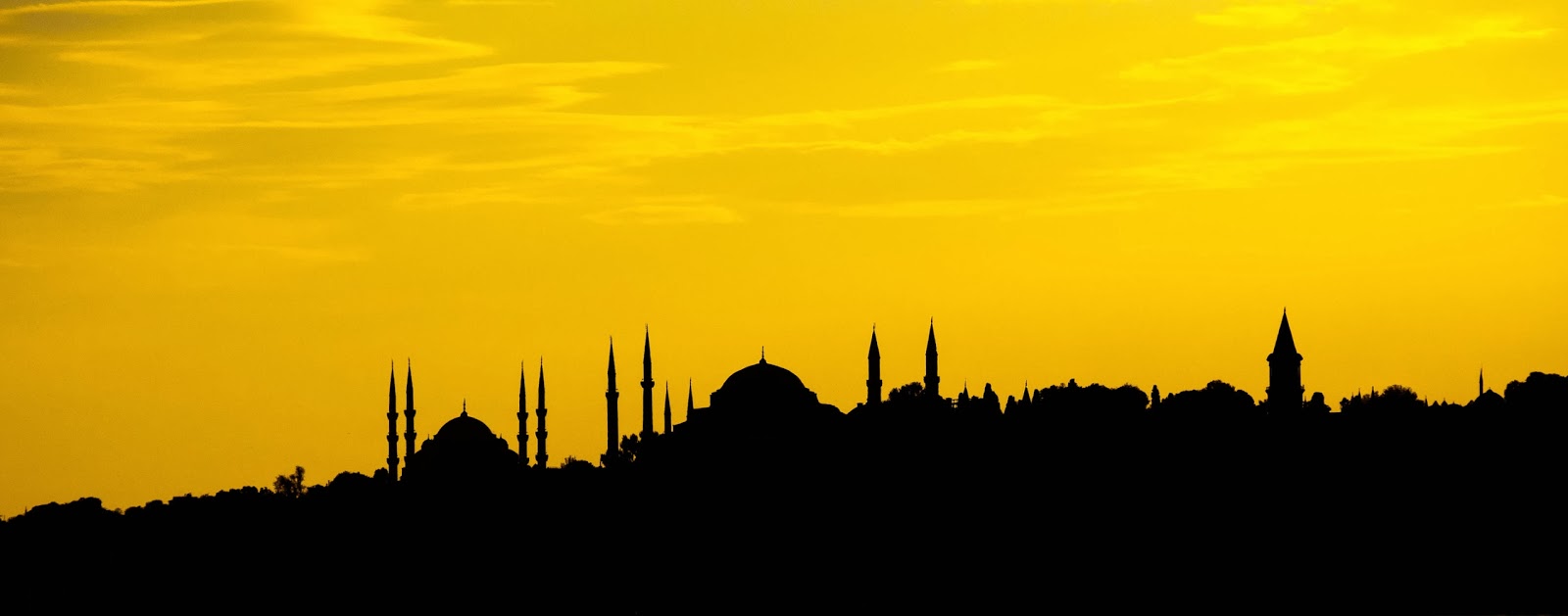
5.18.2014

Street Fighting Sultan: Erdogan's Troubled, Troubling Visit to Soma


Recep Tayyip Erdogan, Turkey’s prime minister, is a natural born fighter; in Turkish his surname means “a soldier is born,” or "brave (male) hawk." So it seems fitting that the past year of criticism and instability has made him increasingly combative.

Since the Gezi Park protests last May, he and his advisers have lashed out at a laundry list of real and imagined enemies, from the interest rate lobby to the Jewish diaspora, and from foreign media to Lufthansa, the parallel state and Pennsylvania, the sanctuary of Turkish cleric Fethullah Gulen.

Confronted by an unfamiliar foe last week, Erdogan went one better. Arriving in the small Turkish city of Soma the day after a coalmine fire that ultimately killed more than 300 workers – Turkey’s deadliest-ever human-caused disaster – the prime minister’s car was mobbed by angry locals as it wound slowly through the streets.

In the city center, he emerged from the car and prepared to speak. Here was an opportunity for Erdogan's bullhorn moment, as when US President George W. Bush appeared at the site of the Twin Towers days after 9/11 and, improvising in response to a shout from the crowd, expressed the sentiment of so many New Yorkers and Americans.

Instead, the Turkish prime minister delivered a defensive speech of jaw-dropping insensitivity. “These types of incidents are ordinary things,” he said. "Explosions like this in these mines happen all the time." Surrounded by the sobbing family members of dead and missing miners, he downplayed their suffering, citing similar disasters that happened in Western countries a century ago.

Walking through the crowd minutes later, Erdogan found himself jostled and jeered and stopped to berate a group of men. “Those who boo the prime minister of the country will get slapped,” he said, jabbing with his finger.

Erdogan quickly made good on his word. He led his entourage inside a grocery store and came upon a young man in a blue shirt. “I was not one of the protesters but just a customer of the store,” the man, Taner Kurucan, later told reporters. He began to back away from Erdogan and his security team as they approached.

“Why are you running away? Come here, you were just telling me to resign,” Erdogan seems to say in this video, lunging toward Kurucan before grabbing and smacking him. “Why are you running away, you spawn of Israel?”

In the space of about 15 minutes, the leader of a country of nearly 80 million people brushed aside the almost unprecedented suffering of his citizens for political purposes, threatened mourners to their faces when they dared express their frustration, and finally wielded violence and, possibly, an anti-Semitic slur on an innocent bystander. It was a performance worthy of Game of Thrones’ fictional, venomous King Joffrey -- and all the more conspicuous just weeks after South Korea's prime minister resigned in the wake of a ferry disaster that killed more than 300 people.

That the slapping victim quickly forgave his tormentor probably said more about Turks than their leader. “I believe the prime minister slapped me involuntarily,” said Kurucan. “He could not control his emotions and took it out on me. It was an unfortunate event, but I do not think he did it on purpose. Then the bodyguards beat me up and I fell down by the freezer.”

Was Erdogan in control? Let's peak inside his head. For starters, his power is nearly absolute. He has been surrounded by yes-men for a decade and has never lost an election, including a confidence-building victory a month and a half ago.

When he recently found himself listening to a speech critical of his government, Erdogan flew into a rage, as President Abdullah Gul, sitting next to him, tried to curb his heckling. “You are misbehaving, and your statements are false,” he shouted at the lawyer giving the speech, before storming out of the hall, entourage in tow.

He is constantly courted by a flaccid media, with reporters often pitching one softball question after another and newspapers and TV stations presenting only the most friendly spins on the news of the day. “Such pandering has made him sloppy, complacent, and blinkered,” writes William Armstrong, an analyst of Turkish media, “so that when a ‘black swan’ event like the disaster in Soma occurs, he is simply not conditioned to respond adequately.”

Not only is he unable to respond adequately, these days he seems capable of only two emotions: pride, when victorious or touting his accomplishments, and belligerence, when faced with dissent.

So this prime minister comes to a town wracked by grief and seething with pain, expecting the usual fealty. When instead his very own people – working class, conservative Turks, rather than Alevis or Kurds or urbane, Twitter-using liberals – boo and hiss and call for his ouster, his blood boils. He needs to lash out, but he knows he is in an open, public space, watched by dozens of cameras and thousands of eyes.

So he threatens, then makes his way to a more protected spot and curses and smacks the first person he finds. The fact that he issued a warning and proceeded to find a hidden spot to unleash his temper shows that he remained in control of his actions, if not his emotions. Yet still we caught a glimpse of the unprecedented.

Turkey has seen a great deal of political turmoil in its 90 years, but never before has a prime minister physically assaulted a Turkish citizen in public. But nor has a prime minister ruled Turkey for this long. The extended reign with minimal political competition has lent Erdogan's ruling Justice and Development Party (AKP) a macho air of superior infallibility.

It's there in Erdogan aide Yusuf Yerkel's kicking of a Soma protester being held down by two policemen, and in the AKP spokesman later defending Yerkel’s actions. It's there in just about everything Erdogan does these days.

And it’s likely to extend through August, when for the first time in Turkey’s history, politicians will directly compete for one of the highest offices in the land. The presidential election will not be about party, like the campaigns that have come before. Voters will instead cast ballots for individual candidates, ostensibly unaffiliated with any party.

He has yet to declare his candidacy, but many believe this is the election Erdogan has been anticipating for much of his career. The problem is that with his dreadful Soma performance he may have finally begun to alienate his sizable base. It does not bode well for Turkey’s democracy that, just now, this street fighter appears surlier than ever, and willing and able to do whatever he pleases.

4.02.2014

This Week in Tayyip: Erdogan Woos, Weds Lady Love

So begins a new weekly series covering the man who has run the Republic of Turkey for nearly a dozen years -- Kasimpasa-born, Rize-raised, Erbakan-weened, former simitci and futbolcu, devlet ve baba all in one, the unstoppable, inimitable Recep Tayyip Erdogan.

Sunday started well for Tayyip, as he decked himself out in a plaid 1970s-style sports-coat, in apparent sartorial solidarity with his base, and voted in Uskudar, a conservative district on Istanbul's Asian side.

Then it got even better, as his Justice and Development Party (AKP) trounced all comers in nation-wide municipal elections. The ruling party took an estimated 45.5 percent of the national vote, handily beating the main opposition CHP's 28 percent and marking a perfect six-for-six in elections since the party's 2001 founding. The AKP's total represents an increase of seven points from the last local elections, in 2009, though a four-point drop from 2011 parliamentary elections.

As he took to his Ankara balcony to deliver the victory speech Sunday night, the PM was in high spirits. He began by waxing Ottoman, thanking his "brothers" in Palestine and Egypt, the Balkans and Syria, before thanking the voters themselves. "My brothers, I thank you very much because you have protected the new Turkey’s struggle for independence. I thank each of you because you have protected the ideal of a great Turkey and the targets of a great Turkey."

He went on to declare war against his many unseen enemies. "Those who managed could flee. More can flee tomorrow. I have filed criminal complaints about some of them; they can also flee. As I have said, from now on we’ll enter their lairs. They will pay for this. How can you threaten our national security?"

He added a bit more fire and brimstone, then appeared to contradict himself, hinting at forgiveness. "Come on, let’s turn over a new page. Oh, the opposition. Oh, the people who have given their hearts to the opposition. Turkey’s interests must be over everything else...Let’s raise Turkey together...We have come to serve the people, not to be a master over them. We are only the porters of a big stone on the path."

Winding down after about 20 minutes, the prime minister claimed his blushing bride. "This is the wedding day of the new Turkey," he said, before closing with a bit of romance. "We got wet together under the pouring rain. In all the songs I am listening to now, everything reminds me of you. Everything reminds me of Turkey."

Tayyip has wooed you, Turkey, and won your hearts yet again. He's all yours.

3.31.2014

Turkey's Roller Coaster Voting Day May Mark Onset of Political Winter


Sunday morning -- the day of highly anticipated local elections in Turkey -- brought blue skies and sunshine in Istanbul. Voters turned out early, waiting cheerily in snaking lines outside polling places in Fatih and Pendik, Cihangir, Uskudar and Kadikoy. Then reality set in.

The trouble began with reports of violence in Turkey's southeast, as brawls and gunfights broke out between backers of rival candidates, resulting in at least eight deaths. Reports of vote manipulation soon streamed in from across the country -- polling place workers handing out the wrong envelopes or urging voters to back a specific party; vote-count observers blocked from entering polling places; ballot papers annulled; the niqab serving as an ID card in one conservative district. As of this morning, the count of citizen-submitted reports of fraud and irregularities at one reliable website stood at 289.

Shortly before polls closed, news websites affiliated with the Gulen movement became inaccessible, reportedly subject to cyber attacks (they have since been restored). Early vote counts diverged widely, with the backers of respective parties reporting the numbers in their favor. To top it off, the power went out in several cities across the country, hampering evening vote counts. Some saw a human hand, others pointed to poor weather conditions in eastern regions.

We saw the expected: politicians of all stripes turned out to vote, including Turkey PM Recep Tayyip Erdogan in one of the 1970s-style sports jackets he favors; in a conservative district of Istanbul, bare-chested FEMEN protesters stood on top of tables at a polling place and denounced Turkey's government; and the the ruling Justice and Development Party (AKP) won Istanbul in a tight race, taking the day's biggest prize.

And the unexpected: a story posted on the website of pro-government Daily Sabah, since altered, claimed Erdogan had won the mayoralty in his childhood home of Rize, along the Black Sea; the AKP lost the Hatay (Antakya) mayoralty to the CHP, in possible fallout from its Syria policy; and as of this morning, the vote in Ankara remained disputed and may end up in court.

There were also signs of progress. In the 90-plus years of the republic, no major Turkish city had been run by a woman. Now the country has not one, but three female metropolitan mayors, including the AKP's Fatma Sahin in Turkey's sixth-largest city, Gaziantep. Further, in the Meram district of Konya, Turkey gained its first-ever headscarfed mayor. Turnout reportedly hit a record, with 92 percent of the country's 52.7 million eligible voters taking to the polls. And the Turkish Communist Party (TKP) looked set to record its first-ever mayoral win, in the eastern province of Tunceli.

But this day was about one man. In the end, despite the corruption allegations, the mass protests and shameful leaks, the AKP took about 45 percent of the national vote, making the party a perfect six for six in elections since its 2001 founding and hinting at a one-party state. An empowered, energized Erdogan declared victory long before midnight, warning that his enemies would "pay the price."

With more meaningful elections still to come, it's a safe bet that the crackdowns on opponents of the regime -- journalists and Gulenists, secularists, protesters, progressives, and social media users -- will continue, perhaps even increase. Erdogan is likely to either run for president this August, or alter party rules and campaign for a fourth term as prime minister in parliamentary elections scheduled for June 2015.

The Turkish people have spoken, and if the current results hold, it would seem they’re OK with a corrupt near-police state overseen by a bombastic, dissent-crushing, conspiracy theory-prone strongman. Despite the arrival of spring, Turkey may be looking at a long, dark political winter.

11.25.2013

Tearing Down Istanbul: excerpt from my feature for Next City


On a gray October Sunday in Istanbul, two policemen handcuff a young man along Tarlabasi Boulevard, bundle him into their minivan and speed off beneath billboards depicting an idyllic vision of the neighborhood’s future: smiling, well-dressed couples stroll hand-in-hand amidst chic shops and smart stone apartment buildings.

Beyond the signage, a few abandoned and crumbling brick tenements rise from a construction zone encircled by eight-foot metal fencing. Down a side street, three kids kick a ripped red soccer ball and two men toss planks of wood onto a small street-side fire. A trio of young men throws softball-sized rocks at an English-speaking passerby, urging him to, “Get away! Go!”

Just a stone’s throw from Taksim, Istanbul’s central square, Tarlabasi is undergoing what Turkish officials call urban transformation. The government is replacing nearly 300 aging 19th century buildings across nine city blocks with high-end offices, apartments, retail outlets and a hotel.

Formerly a Greek neighborhood, Tarlabasi has in recent decades become a sanctuary for the marginalized: mostly Kurds, with a smattering of Roma, transgendered and poor Turks from Anatolia. Now some 2,000 of them have been forced out – receiving as little as a third the market price of their homes – as drug-peddlers, prostitutes and thieves have moved in. About a half-dozen families whose homes have been targeted for expropriation remain.

“It’s like an open prison,” says Bahattin Argis, a 53-year-old Kurdish cook and father of four who has lived in Tarlabasi since 1998. After years of back and forth, an Istanbul court was expected to confirm Argis’ eviction in late November, awarding him 180,000 lira ($90,000) to leave.

“I feel as if the government, they told me they would take my wife, and I said, ‘No, they cannot.’” adds Argis, who is likely to return to Mardin, near Turkey’s border with Syria. “But they just took her. If I am forced to move back to my home, I feel like my honor will have been violated.”

Istanbul was a sleepy backwater of two million people as recently as 1970. But decades of economic growth and sprawl have transformed it into an unruly megalopolis of 15 million, a city now facing one of the most ambitious – and contested – makeovers of modern times. Prime Minister Recep Tayyip Erdogan, an Istanbul native and former mayor of the city, has nearly $100 billion worth of construction projects on the drawing board.

These include a satellite city for over one million people, a multi-billion-dollar financial center, a six-runway airport expected to be the world’s largest, a third bridge across the Bosporus Strait and a 30-mile shipping canal linking the Black Sea and the Marmara Sea that the prime minister himself has called “crazy.” “If you really want to reach the level of contemporary civilizations,” Erdogan explained in April, “we must make such investments rapidly.”

Some 60 percent of the recent decisions made by Erdogan’s cabinet have been about construction projects, according to a government publication. Nationwide, construction has increased five-fold over the past decade. In 2002, Turkey issued building permits for 36 million square meters of space. In 2010, the number was 171 million.

The building frenzy prodded local journalist and political analyst Yigal Schleifer to argue, in a May story for the online publication Eurasianet, that Turkey had “turned into a ‘constructocracy,’ with a domestic economy driven by the construction sector and ruled by a government that seems to believe that every new big construction project only gives it more legitimacy and prestige.”

Construction represents just six to seven percent of Turkey’s GDP, but its real impact is much greater. Building sparks activity in real estate, cars and appliances, manufacturing, finance and other sectors – though too much tends to also result in congestion, corruption, imperiled resources and a roiling population.

“Construction is now the locomotive sector, especially in Istanbul,” Mustafa Sonmez, an economist and a columnist for two Turkish dailies, said during a recent interview at his office near Taksim. “The main aim is to brand the city and sell the land of Istanbul for a higher price, to Turks and to foreign investors, and the government is succeeding.”

CONCRETE ECONOMIES

The bulldozer as stimulus is largely a new concept. Historically, building has been a byproduct of economic growth, not its driver. There have been exceptions, like the so-called Japanese miracle and the early skyscraper eras in Chicago and New York. But for the most part, cities have generally added housing or new infrastructure to respond to urban growth, not to fuel it.

Urbanization across much of the developing world is upending that dynamic. “The phenomenon itself is not new, but it’s happening on a scale that is new,” says Blair Ruble, an urban resilience analyst at the Wilson Center, a Washington, DC-based think tank. “What is new is where it’s taking place, and how it’s taking place” – which is to say, in developing countries, and lightning-fast.

Find an emerging economy and you’ll likely find the makings of a constructocracy. Brazil recently launched a $400 billion infrastructure agenda, just as it nears completion on a similarly sized national housing scheme. Riding Indonesia’s six-percent annual growth, Jakarta is throwing up tall buildings – like the planned, 2,093-foot Signature Tower – as quickly as Doha or Dubai. From 2009 to 2020, the number of skyscrapers in the Indonesian capital is expected to increase more than six-fold, from 40 to 250.

In Lagos, the number of $100-a-night hotel rooms has tripled since 2004. Manila’s skyline has been transformed in recent years, with a 63-story luxury residence, the new headquarters of the Asian Development Bank and a Trump Tower still on the way. And as India’s urban areas welcome another 250 million people by 2030, tens of billions of dollars of new metro lines are on the agenda in Mumbai, Ahmedabad, Jaipur and other cities.

Then there’s the Concrete Dragon. From 2000 to 2010, China built roughly the equivalent of all the housing in Europe, excluding Turkey. This year the government launched a building boom previously unknown to man, in which some 250 million people will be urbanized by 2025 at a cost of as much as $600 billion a year. Rows of 20-story towers, along with roads, schools and hospitals, are appearing almost overnight on formerly dusty plains. “At current rates of construction,” writes the Economist Intelligence Unit, “China can build a city the size of Rome in only two weeks.”

The world’s urban population is growing by three million people every week, or nearly 300 people per minute, says Ruble. And the trend has just begun. As agrarian economies in Africa, Asia and South America shift to industry and services, waves of migrants will continue to seek opportunity in newly modernizing cities. Rates of urbanization and the ratios of rural to urban residents vary greatly, from the nearly 90 percent rural population of Brazil, to around 70 percent in Turkey and less than 40 percent in India. Yet every year for at least the next two decades, 100 million people will move from rural areas to cities, according to Ruble. They will need places to live and work, along with highways, bridges and metro systems to get from one to the other.

Cities generate roughly 80 percent of the world’s economic growth, according to several estimates. That number is sure to rise as urban populations expand, with the growth coming largely from construction. As leaders engage in a construction arms race, competing to attract talent and capital to what they hope emerges as the next great global city, the 21st century may come to be symbolized by the jackhammer and the crane. “The volume of urban construction for housing, office space, and transport services over the next 40 years,” predicts Global Trends 2030, a recent report by the US’s National Intelligence Council, “could roughly equal the entire volume of such construction to date in world history.”

To read the rest of this article, go to Next City.

11.11.2013

Gezi Just the Beginning


While researching my soon-to-be-published story on Istanbul and the global building boom, I came across three nuggets of research that intersect in fascinating ways, underscoring where we are today and pointing toward an angry urban future.

The first bit has been in the news of late, and perhaps on the minds of Turkey watchers. Looking at historical data, Jeremy Wallace, a political science professor at Ohio State University, found that urban population growth tends to undermine authoritarian regimes. The greater the level of urban concentration in a given country, the shorter the shelf life of the autocrats.

It’s a logical finding, highlighting how cities concentrate large masses of people, connect them via roads and transport, and help them progress up the socio-economic hierarchy, moving beyond survival to concerns about services and quality of life. Wallace also found that these autocratic governments seem to understand this, and thus lavish a great deal more attention on their big cities than their rural areas – which, ironically, tends to draw more people to those cities. He also unearthed particularly good news for Gezi protesters and other critics of Erdogan’s government: regimes in which a single city, usually the capital, dominates the urban landscape fall nearly four years sooner.

The second nugget comes from urban data researchers Geoffrey West and Luis Bettencourt of the Santa Fe Institute, who found that the bigger the city, the more efficient it becomes. It's an idea that turns Malthus' theories about over-crowding and pestilence on their head, and its largely been borne out.

West and Bettencourt argue that a city is an organism, and, just as an elephant needs only 1,000 times the energy of a guinea pig despite being 10,000 times its size, a 5-million-person city needs less to accomplish factors more than its 200-hundred-thousand-person brethren. As a city grows, in essence, its inhabitants become better at solving its problems.

Finally, we have Brad Werner, a complex systems analyst at the University of California-San Diego. Of late he has begun to argue that, due to the apparent futility of global environmental management, mass resistance could well be humanity’s best means of slowing the unchecked growth threatening to destabilize life on earth. Many scientists are of the opinion that ditching our current economic system – focused on global capitalism and urban development – may soon become necessary to our survival. But only Werner has gone the next step and argued that protest may be our only chance of saving the planet from ourselves.

Considered together, the three discoveries -- from a political scientist-slash-historian, a pair of data researchers and a systems analyst -- outline a 21st century truth. As cities have gotten bigger, their inhabitants have hit upon protest as the best, most efficient method of dealing with heavy-handed governments failing to see which way the wind blows.

What does it all mean for Istanbul, Beijing, Moscow and other big cities? Hard to say for sure; could be dark days ahead.


11.06.2013

How Istanbul Found Its Melancholia: A Short Urban History


Unfortunately, our generation did not carry the valuable heritage that it inherited into the future. It may seem slightly extreme, but it was almost a betrayal. -- Recep Tayyip Erdogan, Aesthetic Cities conference, Istanbul, April 2013.

The story of Istanbul begins with the first storytellers. Greek settlers first dropped anchor at Chalcedon, on the Asian side of the Bosphorus, in 685 BC – though it may not have been the most promising locale. According to Greek lore, Byzas, a Megaran and the son of King Lisos, some years later asked the Oracle at Delphi where he should settle down and build his great city. He was given vague plans to look “opposite the land of the blind.”

Byzas sailed up the Aegean to where the Marmara Sea meets the Bosporus, spied Chalcedon and decided its settlers must have been blind to settle in a location so inferior to the one across the strait. There, on an acropolis surrounded by water on three sides – the Bosporus Strait to the east, the Golden Horn to the north and the Marmara Sea to the south – he founded Byzantium, in 657 BC.

Byzas secured his prize by building great stone walls around the promontory. The city flourished, taking advantage of the best natural harbor between the Atlantic and the Pacific and great incomes from trade, fishing and tariffs from boat traffic. All that lucre inspired Dionysian revelry among the people – “Byzantium makes all of her merchants drunkards,” the Athenian playwright Menander wrote – and a fetish for physical expressions of greatness.

In 196 AD, Roman emperor Septimius Severus expanded the city walls, erected a Hippodrome and laid a colonnaded Royal Path. Constantine the Great arrived in 324 and expanded the walls again. He also renamed the city in his name and built a forum, temples and palaces. A few decades later Theodosius built what came to be known as the Theodosian Walls, chunks of which remain standing today and are protected as UNESCO heritage sites.

The city stretched for miles, yet Istanbul had barely been born. Soon after Justinian dedicated the Hagia Sophia in 537, the great church was hailed as the architectural splendor of the world, inspiring jealousy in rival leaders. A thousand years later, when Sultan Mehmet II conquered Constantinople in 1453, he is said to have ridden directly to the Hagia Sophia and converted it into a mosque on the spot.

Mehmet II, known to Turks as Fatih (meaning “conqueror”), undertook the first of Istanbul’s many projects of urban regeneration, sprucing up the streets of the sagging capital and building the Fatih mosque complex, the origins of the Grand Bazaar, and Topkapi Palace, among other works.

The Ottoman era peaked in the mid-16th century during the rule of Suleiman the Magnificent, the longest-reigning sultan. He teamed with the famed Mimar Sinan (architect Sinan) to build Suleimaniye, still the city’s largest mosque and generally regarded as its most beautiful.

Sultan Ahmet I needed a dozen years to build the six-minaret Sultanahmet Mosque, also known as the Blue Mosque, and died a year after its dedication in 1616. Centuries of decline soon followed, during which the city’s center of gravity drifted across the Golden Horn, to Pera.

When Mustafa Kemal established the Republic of Turkey, in late 1923, he shifted the national capital, and the focus, to Ankara. Years later, just as he had embraced secularism and modernity for his country, he looked to the West to revive Istanbul and set it on a course for future greatness. In 1935, the French urban planner Henri Prost won a competition to devise a master plan for the city.

Prost, who had gained renown with his work in Fez, Marrakesh and Casablanca, re-envisioned Taksim as a central square with a broad green space. He demolished the Halil Pasha Barracks, which had been built in 1806 and turned into Taksim Stadium a century later, and remade the square. The Taksim we know today, complete with a monument to Ataturk and 30-acre Gezi Park, was completed in 1943.

By this time, a proud melancholy known as huzun had fallen over the city. “In Istanbul the remains of a glorious past and civilization are everywhere visible,” Nobel Prize-winning Turkish novelist Orhan Pamuk writes in his memoir, Istanbul. “No matter how ill-kept they are, no matter how neglected or hemmed in they are by concrete monstrosities, the great mosques and other monuments of the city…inflict heartache on all who live amongst them.”

10.18.2013

Recep Tayyip Erdogan, Master Urban Planner


Turkey’s long-serving prime minister has described his third term as that of an “usta,” or master, borrowing the term from the celebrated Ottoman architect Sinan in reference to the pinnacle of his career after apprenticeship and graduation.

But master of what, exactly? Erdogan never said. Politics? Governance? Conspiracy theorizing? It’s impossible to know for sure. Maybe he was referring to urban planning.

Istanbul is undergoing a slew of major projects that will change its very face in the years to come. Yet it is doing so without a master plan. Or rather, it has a master plan, but officials have decided to ignore it.

Going by his recent comments, Erdogan, native son and former mayor of Istanbul, believes he has a masterful understanding of urbanism and city design and is more than capable of remaking this city on his own.

“If we change our habits, the country, Istanbul, the environment and families will be able to mutually benefit,” ErdoÄŸan said last week, pointing out that 350,000 new cars take to Istanbul’s already congested roads every year. “I hope that you will reconsider your relationship with your vehicles. A modern city is not one where the transport is mainly carried out by private vehicles, but one where it is operated by public vehicles.”

The government is implementing a series of billion-dollar projects that will very likely add to Istanbul’s pollution and sprawl and severely reduce its green spaces. The third Bosporus bridge, the new airport, a canal linking the Marmara and the Black Sea, and satellite cities on the Asian and European sides, for instance, all of which helped inspire the Gezi protests earlier this year.

The usta’s solution to over-population and urban sprawl is to build horizontally. “We have to attach importance to aesthetics,” he said in April. “You will tell me that 40 or 50 storey buildings can de aesthetic, too. They can, I won’t deny it. But humans should live near the soil.”

This must mean that Istanbul Sapphire, opened in 2011 and at 54 stories and 238 meters the city’s tallest building, doesn’t count. Nor does the vast sea of 12-story towers the government is building as part of the Kayabasi housing project.

“In many places, we consider the construction of tall buildings to be a talent, but I don't see it this way,” Erdogan said in a speech at the Justice and Development Party’s symposium on Livable and Aesthetic Cities, back in March. “People are becoming distanced from the land. Horizontal architecture should prevail."

He spoke of “stone and concrete” cities without “soul and direction.” “Now children cannot live their childhoods properly,” Erdogan warned. “We're building childhoods on concrete grounds. Let’s build them on grass.”

The prime minister then asked a pointed question. “Can a generation that has a relationship with nature only through books and cartoons and documentaries have a healthy spiritual view of the world and the future?” ErdoÄŸan wondered. “People don't shape cities. On the contrary, cities shape people.”

There are the words of Tayyip Erdogan, urban planner, and they generally ring true. This Istanbullu just wishes the prime minister were able to put his money where is mouth is.

“Misguided urbanization has been a part of daily life since early years of the new republic,” writes Today’s Zaman columnist Bulent Kenes. Actually, it goes back much further, to the days of Constantine and Theodosius. Istanbul seems to inspire visions of planning grandeur in its leaders. Great for them; not so much for residents, or the city itself.

8.26.2013

How One Istanbul Filmmaker Foresaw the Gezi Protests


As summer winds down and the Turkish government warns of a “hot autumn” of protest, this seems a good time to look back at the roots of Gezi frustration and ahead to a remade political landscape.

One sunny summer day in Istanbul, a woman stood before an animated crowd of protesters, many holding placards denouncing their government’s heavy-handedness. “Against the forces that create divided and unsafe cities, against the usurpation of our right to the city and for the right to shape our city ourselves,” she said to the crowd, “we declare that we’ll stand united, moving beyond all our differences.”

This seems an apt mission statement for the three-week occupation of Gezi Park earlier this year, a happening hailed by many Turks as an unprecedented moment of unity -- when Islamists and nationalists, religious and ethnic minorities and football fans of all stripes stood together against their government.

But the woman, Cihan Baysal, spokesperson for Urban Movements Istanbul, was speaking not just a few months ago, when protests swelled in Istanbul and spilled across Turkey, but in the summer of 2010.

This is a scene from Ekumenopolis: City Without Limits, a 2011 documentary about the city’s problematic transformation that seems to capture an iconic Istanbul uprising that had yet to happen. “Maybe I smelled it or something,” says the filmmaker Imre Azem, sipping tea on a bright, humid day in a park along the Bosporus. “Maybe it was a feeling. I don’t know. But to me it was obvious once I did the research that these urban issues would become the centerpiece of a social movement.”

Born in Istanbul, Azem studied political science and French literature at Tulane University, in New Orleans, before moving to New York City to work for a magazine. In 2003, prodded by what he saw as the injustice of the US invasion of Iraq, he and a friend began making a documentary linking that war to Western colonialism in the region. “We didn’t finish the film, but we learned filmmaking,” said Azem. “I really got a taste for documentaries.”

He saved some money and moved back to Istanbul in 2007 to start work on a film critiquing the global economic system through the problems of Istanbul. He cast about for the right approach, working odd jobs for a couple years, until lightning struck in 2009.

“One day I was listening to the radio and heard a story about the third bridge,” said Azem, referring to the third bridge over the Bosporus, following the first two built in 1973 and 1988. “I had never heard any public discussion of this project, so I started researching it.”

The bridge, to be built near the northern, Black Sea end of the 19-mile-long Bosporus, had initially been proposed during the mid-90s mayoralty of Recep Tayyip Erdogan, who at the time said it would be “murder” to the city.

Istanbul planners agreed, pointing out that the construction area covers forests and water reservoirs the city needs to survive. But as prime minister, Erdogan has spearheaded the project, which began construction on May 29, a day before the Gezi protests exploded.

“Everybody I spoke to said it’s a disastrous project, and that no one is really looking at the effects,” Azem continued. “More importantly, I learned that this is actually part of a much bigger plan, a much broader vision for Istanbul that includes all the urban transformation issues, all these other mega-projects. So I decided to make the film about not just the third bridge, but about all this, making connections between these issues.”

The film opens with one shot after another of Istanbul’s vast, repetitive sprawl, as a narrator likens the 19th century modernization of cities in the West to 21st century urbanization in the developing world. Azem details the destruction of old Istanbul neighborhoods and the mostly failed relocation of their residents before widening his lens to consider the third bridge, other mega projects and the city’s recent economic history. The film makes a convincing argument that the current leadership has put Istanbul in peril.

"With the new convention centers, sports and cultural centers that we're building, we're preparing the way for a modern future on a historic foundation," Erdogan says in the film. "At the same time, we're investing to turn Istanbul into the financial center of the world."

Writing about Ekumenopolis last year, the Turkish daily Today’s Zaman called it “a remarkable cinematic effort,” that “is also one of the most socially and politically pertinent works of our times.”

That pertinence exploded into view this past spring, when a small protest to halt the uprooting of a few trees mushroomed into a movement. Azem was at Gezi Park from the first night, sleeping in a tent with a handful of activist friends.

Abetted by over-aggressive police and security forces, their little demonstration soon blossomed into a nationwide movement against the government. By July, six people had been killed, including a police officer, and thousands injured in the crackdown.

Yet as Azem well knows, local concern about Taksim had been brewing for some time. Starting in mid-2011, when the government announced its plan to remake Taksim Square, several movements emerged to protect the square and highlight urban issues in Istanbul, including Taksim Solidarity and Urban Movements Istanbul. One event in January 2012 even included a discussion at Gezi Park about how “Istanbul Claims its Right to the City.”

“Even as a person struggling for social rights, who made a film about this and had been involved in the struggle for five years, I didn’t expect such a huge response,” said Azem, who believes the political ground has shifted leading up to local elections next March. “The Gezi resistance has sent a message, not only to the AKP, but to the whole established political system. The message is that this system of parliamentary democracy is not representing the will of the people.”

8.09.2013

In Turkey, Black Boxes Aim to Turn Neighbors into Spies


Istanbul has been abuzz this week with the harsh verdicts meted out in the five-year Ergenekon coup plot trial, with 17 of 275 defendants receiving life sentences for plotting to overthrow the government. It’s a stern warning to coup plotters, to be sure, much like another bit of recent, less-covered news.

Last week, police announced plans to install neighborhood informant boxes in cities across Turkey. Dubbed the Confidential Police Notice Point Project, the move will allow residents to submit anonymous written and oral tips on their neighbors. Picture a small black box on the corner where neighbors drop in slips of paper incriminating one another for offenses like banging pots and pans in support of the Gezi Park protesters (a nightly show of solidarity in many urban areas in the weeks following the countrywide protests).

“It’s a crime to disturb neighbors,” Prime Minister Recep Tayyip ErdoÄŸan reportedly said in July, urging the public to turn in dissenters. “I’m telling you that such acts require punishment.”

The informant boxes follow a government decision to replace private security workers with state police at all state-run universities, the better to keep an eye on protest-prone college students. Meanwhile, anti-government protests that started back in May continued this past weekend.

On a sultry night, police chased a few hundred demonstrators from Gezi Park using teargas. Then, seemingly unaware of the irony, they drove armored trucks down Istiklal, or Independence, Avenue — Istanbul’s main pedestrian thoroughfare, filled with high-end shops and cafes — shooting rubber bullets at those brave or dumb enough to get in their way.

All this should be acutely troubling to anyone who cares about democracy in the urban world. Istanbulites long weary of the gaze of their government now must look into the eyes of their neighbors. Sure, in the 21st century, public assistance for crime-solving is a must. And most Western countries maintain anonymous hotlines and 411 numbers citizens can call with information on crimes and suspicious activity. But tools similar to the informant boxes have been used in dictator-run Arab countries, and as well as in Nazi Germany and Stalinist Russia — places where secret police kept watch and public trust evaporated.

In fact, local informants are not completely new to Turkey. “Historically, Istanbul police relied on local informants — the imam, the mukhtar (neighborhood or village leader) — at times of social unrest,” Fariba Zarinebaf, director of Middle East and Islamic studies at the University of California-Riverside and author of Crime and Punishment in Istanbul: 1700-1800, said via email, citing the late 19th century. “But I doubt these measures were ever that effective.”

In a modern world, with a government that has used force to silence demonstrators and cast them as looters, terrorists and rodents, this plan seems far more sinister.

What’s more, the rule of law has never been terribly strong in Turkey. With anonymous reporting, the potential for abuse is considerable. The government has in recent months made little secret of going after journalists it deems a threat to its reputation. What would stop the authorities from going after citizens that draw their ire, claiming an informant’s tip as their prod?

“It is interesting that dissent, i.e. banging on pots and pans, is being defined as a crime,” Zarinebaf said. “Citizens are asked to report this specific form of dissent, and you can imagine how much tension this would create among neighbors who may be mad at each other for various reasons, trying to settle scores.”

On the conservative Istanbul street where I live, near Galata Tower in Beyoglu, locals are out in the street all day. Older men chat, smoke and stare while headscarved women watch their children play and young boys huddle in groups to snack and laugh. They know everybody and trust each other. Crime is rare.

Security in the city relies on a patchwork of similarly organic neighborhood watches, based on familiarity. Take away that sense of familiarity and openness, and erode the system of public trust that has made Istanbul one of Europe’s safest cities.

“If the boxes work, it will tear away the unity of the mahalle (neighborhood) and will create extreme distrust,” Zarinebaf said. “But I am sure the citizens will defy the measure in most neighborhoods. The public has a clear understanding of what constitutes a ‘crime’ and when they should inform on criminal elements.”

The question is whether they may begin to expand those concepts at the urging of their government. In a recent television ad from the government security directorate, a young man is shown giving a rose to a young girl. Soon after, the girl is seen chanting slogans in a street protest. “They use the mask of ‘standing up for your rights’ in small demonstrations,” the narrator says, “ then they quietly steal your child from you.” The story closes with the girl becoming a suicide bomber.

The message is that any young person who stands up for his or her rights is a terrorist — and that everyone must be on guard against threats lurking in plain sight, like the young man with the rose.

There is, however, still hope for many parts of Istanbul where residents have already banded together in the wake of the Gezi protests. Urban Turks have launched more than 100 neighborhood forums all over the country. Most groups meet a few times per week and discuss the issues of the day, from the local to the national, and tend to share a strong sense of solidarity in opposition to the government of ErdoÄŸan and the ruling Justice and Development Party (AKP).

For these groups, the informant boxes will not be a welcome addition to the neighborhood and likely will go all but ignored.

But the same cannot be said of the large swaths of AKP supporters — like many residents of my neighborhood — that make up as much as half of Turkey’s 75 million people. For them, the çapulcu, the pot-banger, the terrorist and the coup plotter may soon be one and the same -- and the informant box may have its uses.


Originally published here, for Next City

8.07.2013

A Long Flight from Beirut to Istanbul


It's the day after a glorious Lebanese wedding, or more accurately a long, drink-fueled wedding weekend, so I'm tired and hungover as I board my hour-and-a-half Middle East Airlines flight from Beirut back home to Istanbul. I want peace and quiet, the freedom to read, relax and look out the window, perhaps even catch a bit of shut eye. More than anything I want to be left alone.

Nearing my aisle I'm smacked upside the olfactory by the strong smell of vomit. I settle in to my window seat as a flight attendant comes by and sprays some cheap, potpourri-smelling air freshener. Apparently Febreze has yet to reach Lebanon. Within minutes the smell returns. I hit the call button. She returns and sprays for a full minute. Again the smell returns, though now overlain with eau de fake flowers.

I resign myself to the stench and start digging into my New Yorker, when the woman sitting next to me spies her friend a couple rows back. She asks the slim, thirty-something fellow sitting next to her friend to switch seats. He does so, and sits down next to me. "That woman, crazy,” he says to me, grinning. I nod and return to my reading.

"What are you reading?"

"Please," I say, wearily, "no."

A few minutes pass as we taxi for takeoff. Our elbows bump on the armrest between us. He grabs the small airline pillow, and places it on the armrest. "Here," he says, grabbing my elbow, lifting it up and placing it back on top of the pillow, "put your arm on this, very comfortable."

"No thanks."

We take off and I take a drink from my water bottle and put it back in the seat-back pocket in front of me. "I’m also thirsty," he tells me. Is he suggesting...

"Good," I say, "they are bringing drinks."

The flight attendants come down the aisle handing out meals -- a slab of white cheese between two thick slices of white bread, orange juice and a biscuit. I turn mine down; he accepts and rips open the tray.

"Eat something!" he shouts, thrusting his sandwich towards me. "It’s delicious."

A minute passes. "Here," he says. "This, good biscuit." Again I say no thanks and attempt to focus on my reading, or the view out the window, anything to get him to understand.

"Orange juice!" he exclaims, offering his cup. "Very fresh. Drink some."

I shake my head.

"What this?" he asks, holding a packet of powdered creamer. I explain and start reading again. Out of the corner of my eye I see he’s ripped open the packet and is pouring bits of the powder into his hand and slapping into his mouth.

The flight attendants are coming down the aisle again. "Do you want coffee?" he asks me. I plead with him to stop and leave me to my reading. One, two, three minutes pass. Perhaps he's finally gotten the...

His hand shoots across my field of vision as he reaches over to my side of the aisle. "Here, take this," he says, popping my controller out of its panel on the seat-back in front of me. "Fuck the reading and play with me."

Shocked, I laugh, and decide this little episode needs to be put into writing, recounting the most wonderfully annoying seat-mate of all time. And in the eight-or-so minutes I’ve been writing this he hasn’t said a word. I think he even moved slightly away from me in his seat, towards the aisle. Respect for the writer at work? Or has he finally given up after his obscenity-laced last gasp?

Whatever the case, the pilot is announcing our descent into Istanbul. I offer him a piece of gum, and he accepts. "Strong mint," he says, fanning his mouth as if it’s on fire.

Now I'm grinning. As we touch down I realize I'd forgotten all about the vomit stink and he whips out his phone. "Let me get a photo of you to remember... uh, what is your name?" I tell him. "To remember my friend David," Ali says, grinning broadly. He leans towards me, extends his arm into the aisle while tilting the back of his phone towards us, and snaps.

8.04.2013

Cobblestones and Urban Resilience


They dug up my street the other day to repair a water pipe. In cobblestoned Galata, such work requires the removal of dozens of sizable stones, which must be set aside for post-job replacement. But while the work is ongoing, the yawning hole is jarring -- the work-a-day life of the city has little respect for enchanting street scenes.

And yet it does. Istanbul's Nobel-winning novelist Orhan Pamuk noticed this, in the book he wrote about his beloved hometown: "When they dug up a street, the cobblestones had to be pulled up one by one and this made the work drag on for ever -- particularly if they found a Byzantine corridor underneath. When the repairs were done, I loved watching the workmen replacing the cobblestones one by one -- with a bewitching rhythmic skill."

I missed the bewitching rhythm of replacement, but the next day when I passed by the dug-up area I found the stones roughly back in place, though somewhat haphazardly -- too much space between stones here, one slightly askew there. A few days later, the morning after a hard rain, the stones had begun settling into place.

It's probably safe to assume that over the past half millennium or so each and every street in Galata has been similarly dug up. In a month or two, my street will look as if it hadn't been touched in centuries, the disturbance gone and forgotten, like the thousands that have come before.

7.12.2013

The Madness of Sultan Tayyip


ISTANBUL -- May 29 is an historic date for Turkey, and particularly for this eternal city on the Bosphorus. On that day in 1453, Sultan Mehmed II, known to Turks as Fatih (the Conqueror), took Constantinople from the Byzantines, launching a Turkish reign that continues to this day.

Exactly five hundred sixty years later, a few miles north of where Mehmed II built a castle in preparation to take the city, Prime Minister Recep Tayyip Erdogan turned up at a pomp-filled afternoon event along the Bosphorus to launch a grand and controversial infrastructure project – and his own political decline.

Growing up a dozen miles away in Kasimpasha, a conservative, working class district on the north bank of the Golden Horn, Erdogan earned a reputation as an indomitable brawler. This take-no-prisoners persona propelled his political rise, into office as mayor of Istanbul in 1994, and, nine years later, prime minister.

After a decade of strong economic growth, today's Turkey is brash and influential, much like its leader. Istanbul, the country’s cultural capital and economic engine, has developed into a tourist mecca and go-go metropolis of 15 million, where jackhammers, scaffolding and construction cranes are as familiar as the city’s Virginia Slim minarets.

But now the lord of the realm appears to be fighting an army of ghosts in addition to the usual suspects. That groundbreaking ceremony, for a third bridge across the Bosphorus, presented a trio of offenses that pushed public ire beyond the breaking point. The $3 billion project will require the razing of one of Istanbul's few remaining forests and is going ahead despite the opposition of environmentalists, urban planners and the Istanbul master plan.

During the event, officials announced that the bridge would be named after Yavuz Sultan Selim, a 16th century Ottoman ruler. Selim the Grim, as he's known, is remembered by Alevis -- a moderate Islamic minority of about 15 million people in Turkey, or 20 percent of the population -- as responsible for their mass slaughter. Selim is no hero to progressives either: in 1515 he made printing, a recent invention at the time, punishable by death.

Finally, after finishing up his remarks on the bridge, Erdogan directed a few words to a small band of demonstrators that had refused to give ground that morning to bulldozers attempting to uproot a handful of trees and begin construction on a replica barracks and mall project in Taksim, Istanbul's central square. “Do whatever you want,” said Erdogan, more paternalist than pugilist. “We have made our decision on Gezi park.”

“That really pissed people off,” said Imre Azem, the director of Ekumenopolis, a 2011 documentary about urban transformation of Istanbul. Azem was among the first handful of campers at Gezi Park the night bulldozers first arrived, Monday May 27. “So a lot more people came, and then there was the first dawn operation, at 5am Thursday, and after that it got huge."

We all know what came next: the government's harsh crackdown on Gezi demonstrators sparked mass protests in dozens of cities across the country, resulting in thousands injured and arrested and at least five people killed. The question now is whether all these events might lead to Erdogan’s demise. In a way, they already have.

Rather than cowing their leader, the mass protests have exposed his tin ear and stoked his inner despot. In a midnight session this past week, parliament passed a bill that castrates the country’s leading body of architects and planners (Chamber of Turkish Engineers and Architects), handing to a government ministry the chamber's ability to review major urban projects and issue permits and visas.

This is a direct affront to the Gezi protest movement, which was at root a fight against authoritarianism and government-controlled urban development. The new policy will essentially allow development by fiat, leading to more third bridges, more Gezi Parks, and more public protest. Instead of offering a solution, Erdogan has presented the protest leaders his middle finger.

What’s more, as a result of financial and monetary instability sparked by the protests, Ankara has launched investigations into financial market dealings with foreigners, and more recently into capital markets and its foreign exchange deals. These beg the question, why would a leader whose considerable reputation rests largely on a decade of economic dynamism (in addition to the shackling of the military) endanger the country’s credit rating and potentially scare off foreign investment? Why would Erdogan put Turkey’s great 21st century growth story at risk? His nature.

When cornered, a brawler tends to keep fighting. “Some people are saying I'm too rough," he said in June, referring to his response to the protests. "I'm sorry. This Tayyip Erdogan is not going to change." If he had been a bully before, post-Gezi Erdogan seems a modern-day Selim the Grim, with a dash of the madness of King George.

"Social media is the worst menace to society,” he said during a TV interview, despite the fact that his official Twitter account has more than 3 million followers. He blamed the protests on the international media, foreign extremists and an insidious "interest-rate lobby," among others, and said the same forces were behind the recent protests in Brazil. “The same game is being played in Brazil,” Erdogan told a rally of his supporters in Samsun. “They are controlled from the same center."

Unaware of the irony, ErdoÄŸan urged Alevis, who have led the protests in many cities, not to be provoked by the efforts of the main opposition party. "Right now, the owners of the TV channels and newspapers that provoke the Gezi events, those who want to pour Alevis onto the streets, are all members of the [opposition] CHP,” he said.

The most troubling sign may have come this week, when he named Yigit Bulut, a TV personality who worries that world powers are trying to kill the prime minister via telekinesis, as a top economic adviser.

Leaders of Turkey have rarely wanted for foils or been big on checks and balances, but Erdogan’s decade in power appears to have warped his understanding of his position, and of democracy itself. A couple months ago he was at his peak, angling to rewrite the constitution, install a French-style presidential system and remain in office until the 100th anniversary of the republic in 2023. That scheme is now in tatters, and every move he makes seems dubious, from his protester conspiracy theories to his fumbled Syria policy and his government's confused, confusing response to the ouster of Mohamed Morsi in Egypt.

The government's response to the Gezi Park protests appears to have reduced public support for the the prime minister. A survey released in June found that Erdogan’s job approval ratings had fallen more than 10 percent since April, while support for the AKP had dipped one percent. Looking longer term, the very commercialization and urbanization Erdogan has ridden to economic glory has drawn millions of Turks to the cities, creating a more informed, urbane populace and perhaps starting to erode his largely rural, conservative base.

Still, there’s no reason to expect the AKP to fade from Turkish politics anytime soon. Millions of supporters still respond to the snap of Erdogan's fingers, but his stranglehold on national power has slipped. He's lost the political deftness that propelled his rise and, with elections looming next year, is barred by AKP rules from running again for prime minister.

The auspicious date of the third bridge groundbreaking was surely no accident. Erdogan has repeatedly linked himself to grand Ottoman-era rulers, such as with the opening of the Panorama 1453 Museum a few years ago. His visions -- the third bridge, the Marmaray rail tunnel under the Bosphorus, the world's largest airport, the $2.6 billion financial center, the Camlica Mosque -- might all be viewed as efforts to leave his mark on the former Constantinople.

But now that conquest has been slowed, along with Erdogan's political career. He'll still rank among the best leaders the republic has had, but his dream of becoming a modern-day Fatih or a second Ataturk will remain just that. The debate about whether he's lost his marbles will likely rage for some time, but for Sultan Tayyip, the end is nigh.

6.27.2013

Is Turkey Remaking Muslim Democracy?


Book Review
Muslim Nationalism and the New Turks
Jenny White
Princeton University Press

January 26, 2013

One evening in September 2011, thousands of Egyptians heralded the arrival of Turkish prime minister Recep Tayyip Erdogan at Cairo airport with cheering and shouts of "Allahu Akbar!" Many of the well-wishers were members of the Muslim Brotherhood, the rising Islamist organisation that has in recent years cited Erdogan and Turkey as an inspiration. On his first post-Arab Spring visit to the region, observers expected the tough-talking leader of the world's most successful Islamist party to offer support and guidance.

But in his speech that night, Erdogan explained that Turkey was a secular, rather than an Islamic, democracy, and advised Egyptians to build a state that respects all religions. Days later, in Tunisia - where the leading political party, Ennahda, has also acknowledged the influence of Erdogan's party - he explained his remarks. "A person is not secular; the state is secular," Erdogan said in Tunis. "A Muslim can govern a secular state in a successful way."

Though likely to disappoint ascendant Arab Islamists, this idea of a personal Muslimhood, free from state oversight, is at the centre of Turkish life today. It's also the focus of Muslim Nationalism and the New Turks, a deeply insightful book by Jenny White, a professor of social anthropology at Boston University. As a number of nationalist groups battle for Turkey's soul, White sees the "new Turks" strutting on the world stage, remaking Muslim democracy and finding great pride in their Ottoman past and their ability to consume God and goods as they choose.

***
With the founding of modern Turkey in 1923, Mustafa Kemal, later given the name Ataturk, or father of the Turks, began to remake Turkey as a westernised republic in which an authoritarian government oversaw religion. Ataturk also established the Turkish national identity, centred on Muslimhood, racial purity, and Turkish language and culture.

The Turkish military soon emerged as the guarantor of secularism, repeatedly stepping forward to push out leaders it thought had compromised Kemalist ideas. To this day, says White, the Turkish army purges its officer corps of anyone who refuses to drink or whose wife wears a headscarf.

To outsiders, the 2002 rise of Turkey's Islamists seemed at the time a startling event. But White's hindsight outlines a natural progression, linked to globalisation and the broader, regional resurgence of Islam. Starting in the 1970s, the Turkish military allowed greater Islamic freedom, with open discussions in the press and in public about Islamic intellectuals like Maulana Mawdudi and Sayyid Qutb.

The country's first Islamist political movement appeared in 1975, when a group led by Necmettin Erbakan released its National Vision, a pro-business platform linking Islam to nationalism. In the 1980s, the success of thousands of pious businessmen from the Turkish heartland, dubbed the Anatolian Tigers, gave rise to a more conservative elite and to influential networks like the followers of religious educator Fethullah Gulen.

Erbakan's Welfare Party stood against westernisation and secularism and preferred alliances with other Muslim countries to Nato, the European Union (EU) and Israel. Yet it was also seen as forward-looking, progressive and pro-Turkey, and had support in small towns and major cities, among rural women, urban professionals and the Anatolian Tigers. The party gained ground, and in 1994 mayoral elections, its candidate, Recep Tayyip Erdogan, became mayor of Istanbul.

By the time Erbakan became prime minister two years later, 40 per cent of the party's supporters were secularists, and Welfare had emerged as Turkey's modern political party. To the military, of course, that meant Erbakan had to be pushed from office and the party shut down. Its successor, the Virtue Party, rose quickly, until it too was banned in 2001. But that same year, Erdogan founded the Justice and Development Party (AKP), adding an embrace of globalisation to Erbakan's vision and downplaying the Islamist elements. The party won the 2002 elections and has dominated Turkish politics ever since.

***
On the surface, Turkey's AKP decade has been one of social stability, economic growth and hope for the future. But White reveals how the public discourse has fractured. As Ataturk's vision has collapsed, Turks have splintered into a million shifting shades of nationalism: Kemalist, Islamist, rightist, ultranationalist, neonationalist, liberal and more.

Despite their disagreements, all these groups place great value on the country's Ottoman past. Today, the year that most evokes Turkish pride is not 1923, but 1453, when Constantinople fell to the army of Sultan Mehmet II. That victory is now celebrated in malls and history museums, bestsellers and popular soap operas.

Ottoman glories also undergird Turkey's new quasi-imperialist foreign policy. Ahmet Davutoglu, Turkey's bold foreign minister, often speaks of reintegrating the greater Middle East to "bring back the golden era".

"Since 2002, when the AKP won its first major election," writes White, "an Islamist vision of political life has given way to a Muslim nationalist vision that is focused less on a shared global umma and more on a structured relationship with the Muslim world in which Turkey takes a leading role, as it had in Ottoman times."

We see this in Turkey's toughness with Israel and the creation of a visa-free zone with Syria, Jordan and Lebanon. Yet just as Turks treasure their Ottoman heritage, they also see themselves, and their religion, as distinctly un-Arab. "One thing all nationalists agree on," writes White, "is that Turkish Islam differs from Islam tainted by Arab influence."

But what does that mean? How can Islam be uninfluenced by the people who midwifed its birth? Speaking to White, Omer Ozsoy, a reformist theologian at Ankara University, wonders: "While reading the Quran, to what extent am I facing an Arab reality and to what extent the demands of Allah? We have to distinguish between these." Such comments might be blasphemous in many Sunni Arab-dominated countries, but Turkish Islam has been steeped in centuries of moderate, Sufi ideology.

Turkey's leaders stress a modern, personalised Islam, as suggested by Erdogan's remarks in Tunis. The new Turk can wear Gucci and still go proudly and with purpose to Friday prayers. With more than half the country's population under 30, this marks a profound shift. "The choice to be suurlu, a 'consciously believing Muslim', as opposed to blindly following tradition, has become highly valued as a sign of Muslim modernity," White writes.

The word "tradition" has become shorthand for Wahhabism, Salafism, and other deeply conservative Sunni belief systems that have gained a foothold across the broader region. "This government is rather different than the Muslim Brotherhood," Ceylan Ozbudak, the executive director of the talk show Building Bridges, said during a recent episode. She and her co-hosts explained that they didn't like the word "Islamist". "We have a Muslim government," Ozbudak explains, "but they apply the rules of Islam, not the rules of tradition."

Indeed, Erdogan has said he views Sharia not as a strict legal code but as "a metaphor for a just society". The country has no influential, deeply rooted religious establishment, no body akin to Egypt's millennium-old Al Azhar - which is mentioned in that country's new constitution - or Saudi Arabia's powerful ulema. This allows AKP leaders to determine, largely free of outside influence, how to build a 21st-century Muslim democracy, and forge a new national identity.

***
White uses her fluent Turkish and more than 30 years of extended stays in the country to flesh out this bold and unpredictable social and political experiment. Of her two previous non-fiction works on Turkey (White has also written three Ottoman-era crime novels), the second, Islamist Mobilization in Turkey, won the 2003 Douglass Prize for best book of European anthropology. White is indeed an anthropologist, rather than a journalist or political analyst, and her book goes on to detail the uncertain place of women in 21st-century Turkey and the "contradictory nature of Turkish social and political life as it accommodates individual choice while validating primacy of family and community in determining ethics and norms."

But academic jargon of that sort is rare; the writing is generally clear and straightforward, and the book is chock-full of rich titbits from Turkish society. White highlights changing fashions among Turkey's elite in the evolution of the word for squatters - from gecekondu (literally, "placed there at night") in the 1970s, to varos, a Hungarian term referring to an area beyond the city walls, today - and the sudden disfavour of moustaches. Once a proud, defining facial feature for nearly every Turkish man, they now signify the meaner classes ("men from the varos").

White has a clear affection for Turkey, which may serve to mute her criticism. Though she does briefly discuss the vast Ergenekon trial, in which a shadowy group of 200-odd military, police, journalists and activists have been accused of plotting to overthrow the government, she neglects to discuss the government's oppression of journalists until the book's final pages. And she mentions Ahmet Sik, a journalist who has spent the past year in prison awaiting a verdict on questionable, Ergenekon-related charges, only in her endnotes.

Yet crackdowns on the press have been skyrocketing. No country jailed more journalists than Turkey in 2011, including China and Iran, and no country is currently holding more reporters in prison. In recent months, the European Union and the London-based writers organisation PEN International have criticised the Erdogan government for using antiterrorism laws to justify arrests and create a climate of fear.

A greater oversight may be the short shrift given to Turkey's long-suffering Kurds. Kurdish militants have since the late 1970s fought the Turkish government for their own state. But the vast majority of Kurdish Turks, estimated at 13 million, or about 16 per cent of the country's population, seek only to maintain their own language and traditions. The willingness of the Erdogan government to accept and integrate them is key to the country's future.

White does better detailing how the state and society marginalise non-Muslims. She visits Ishak Alaton, an 82-year-old Jewish Turk and a well-known entrepreneur, who says he "has never been given the feeling by this nation that I am part of it". The Turks even have a word for such people: vatandas, non-Muslim minorities, who can be citizens but not true Turks. She also points out how the authorities, the military and the media regularly voice concerns about the threat of Christian missionaries, engendering widespread fear and occasional, vicious attacks on priests.

***
Filled with insight, Muslim Nationalism and the New Turks is sure to become a leading text for those looking to read the Turkish tea leaves - a readership on the rise of late. In her conclusion, White considers the Turkish model, acknowledging similarities between Turkey and newly free Arab countries. Ultimately, the differences win out.

Turkey was never conquered and colonised, and is thus able to view western ideas with interest, rather than suspicion. It has been a democracy, or has at least resembled one, for 90 years - time enough to strengthen its institutions and solidify its political system. Finally, decades of economic growth have created a large, globalised middle class able to balance Islam with modern living.

Speaking at a political conference in 1998, Erdogan quoted from an Islamic poem: "Democracy is just the train we board to reach our destination. The mosques are our barracks, the minarets our bayonets." How did he go from there to the secular Muslim statesman of today? Perhaps it was the five-year political ban that came as a result. Perhaps his time in office, bumping up against the possible, altered his perspective. Perhaps he hasn't changed at all, and we'll find with his government's release of an updated constitution later this year that he has merely been biding his time.

Whatever the case, Islamist groups like Egypt's Muslim Brotherhood are unlikely to emulate Turkey's Muslimhood model anytime soon, though the AKP vision might suit the young activists of Tahrir Square. Yet, if Turkey's history is any indication, their time in power is decades of democratic and economic development away.


Originally ran in The National

The Other Winners from Gezi Park: Urbanists Everywhere


After five days of battling police forces, Taksim Solidarity, a collective formed by protesters in Turkey’s largest city and dedicated to advocacy for the threatened green space of Gezi Park, finally listed its demands Monday night: That Gezi Park remain a park; officials involved in the recent police aggression are forced to resign immediately; tear gas bombs banned; all jailed protesters released; and demonstrations allowed throughout Turkey.

As of Tuesday, protests have flared in dozens of cities across the country, and at least 1,700 people have been arrested, hundreds injured and at least two killed, with a handful in critical condition. Just today, a 240,000-member workers union began a two-day nationwide strike to protest the police’s excessive use of force. Why the sudden mass support? “This is not about a park,” read a leaflet circulated online. “This is about democracy.”

It may have begun with the Emek Theatre, a century-old Istanbul cinema torn down by the municipal government to become a mall six weeks ago. Or with the way the ruling Justice and Development Party (AKP) rushed to pass a restrictive new alcohol law last month. Or the way Prime Minister Recep Tayyip Erdogan defended it, saying the previous laws on alcohol had been created by “two drunkards” (likely referring to the beloved founder of modern Turkey, Kemal Ataturk, and his comrade-in-arms Ismet Inonu, the country’s second president), while his new version was “commanded by religion.” It might have started with the government’s long-running crackdown on domestic media and freedom of expression, or its decision to eschew a master plan for Istanbul.

Whatever the case, by this past weekend, when a demonstration to save one of the few remaining green spaces in central Istanbul exploded in a matter of hours into a visceral national movement, it was clear that Turks had had enough of the AKP’s authoritarianism. Catalyzed by an unwanted makeover of public space, Istanbul residents demanded a say in the governance of their country and the development of their urban environment. A small group of determined urban activists transformed a local effort to “save the trees” into a call heard around the world to “reclaim the streets, and the country.”

Just a month ago, Erdogan was at the peak of his power, plotting to rewrite the constitution and transform the government to install a French-style presidential system. After a decade of strong economic growth, Turkey is brash and influential, much like its leader. Istanbul, the country’s cultural capital and economic engine, has developed into a tourist mecca and go-go metropolis of 15 million, where jackhammers, scaffolding and construction cranes are as familiar as the city’s cigarette-slim minarets.

Istanbul is only 1.5 percent green space, compared to 17 percent in New York City. The city’s central area of Beyoglu is particularly nature-free. At the northeast rim of Taksim Square, Gezi Park may be unkempt and little appreciated, but it is also one of the few remaining areas with trees in the district. On top of that, in a city suddenly filled with swank shopping destinations, it was slated to become yet another mall.

“Just like our ancestors, we are continuing to write history and leave behind creations,” Erdogan said at a groundbreaking ceremony for a $3 billion bridge over the Bosporus last week. The bridge, to be completed in 2015, is named after 16th century Ottoman conqueror Yavuz Sultan Selim — the man widely seen as responsible for the slaughter of Alevis, a moderate Muslim people that today makes up some 15 percent of Turkey’s population of 75 million. “This is how we are building a powerful Turkey,” Erdogan added. “For the seven hills of Istanbul, we have seven grand projects — one is this bridge, a third necklace over the Bosphorus.”

Other Erdogan-backed projects in the works for Istanbul include the world’s largest airport, the city’s largest mosque on a hill overlooking the Bosporous, and a project to carve out a Suez Canal-style waterway to the west of the city, linking the Marmara to the Black Sea — a project the prime minister himself has called “crazy.” Thus far, the government has made all the decisions about these projects with little to no public discussion.

The third bridge had long been opposed by progressives and environmentalists because its anchors were to be built in some of Istanbul’s last great swathes of green, not far from the Black Sea, and the expectation was that the resulting traffic would doom those areas to smog and sprawl. Yet the government, led by Erdogan’s AKP, went ahead despite the opposition. Again, residents were not consulted.

Other troubling government actions in Istanbul include the following: Mass evictions of low-income residents to make way for renewal in tumbledown Istanbul districts like Sulukule, Tarlabasi and Zeytinburnu; the stoppage of May Day activities in Taksim Square by cutting ferry, bus and metro service in the area and sending out tens of thousands of policemen to apply liberal doses of teargas; and the evisceration of Taksim, the heart of the city and the site of a constant stream of smaller protests in recent years.

Several dozen protesters took to the park early last week and refused to vacate to allow for demolition. In response, Erdogan underestimated the people’s frustration and overestimated his own power. “Do whatever you want,” he said. “We have made our decision on Gezi park.”

Police came to retake Gezi Park at dawn last Thursday, burning tents and applying teargas, pepper spray and the occasional beating. The protesters scattered but soon returned. After authorities again forcibly evicted the demonstrators the following morning, protesters returned in greater numbers and spread details of the attacks via social media.

With the national media cowering, much of the news about what came to be known as Occupy Gezi has spread, particularly in those first few days, via Twitter and Facebook. One photo from last Thursday — of a smart-looking woman in a red dress, white handbag slung over her shoulder, all but ignoring a policeman’s aggressive pepper spraying — became a symbol of protesters’ defiance.

Woman in red becomes leitmotif for Istanbul’s female protesters. Credit: Photo by Osman Orsal. Reuters.
Other widely circulated images included a gas-masked whirling dervish protester and, not surprisingly, some nasty head wounds. Protesters in Turkey have flooded networks with up to 100,000 tweets an hour, directing each other to hotspots, calling for media coverage and highlighting authorities’ acts of violence. They used the crowdfunding site IndieGoGo to raise more than $80,000 for a full-page ad in the New York Times.

Not all the protesters have been angels. They set dumpsters on fire, graffitied walls, smashed windows, looted shops and burnt cars. Some used small makeshift weapons. But the vast majority has been peaceful, and Sunday morning many of them worked together to clean Gezi Park.

Erdogan, yet to respond to the demands of Taksim Solidarity while on a state visit to North Africa, seems to have turned into a modern-day Selim the Grim. “There is now a menace which is called Twitter,” he said during a TV interview Sunday, echoing dictators everywhere. “To me, social media is the worst menace to society.” The following day, as Turkey’s stock market took its biggest tumble since Erdogan came to power, he blamed the protests on “extremist elements” and said intelligence agencies were looking for a foreign hand. He also said, “anyone who drinks is an alcoholic” and threatened to meet the protesters’ numbers with more of his own.

Solidarity from Zuccotti Park to Gezi Park. Occupy Wall Street and members of New York City’s Turkish community picketed the Turkish consulate in New York Street on June 3. Credit:Michael Fleshman on Flickr
Leaders of Turkey have never been big on checks and balances, but Erdogan’s decade in power seems to have warped his understanding of his position and of democracy itself. Perhaps it’s not surprising. Growing up in conservative, working-class Kasimpasha, Erdogan earned a reputation as a take-no-prisoners brawler. Rather than negotiate or surrender when cornered and losing control, a brawler keeps on fighting, clinging to the feisty, indomitable attitude that put him on top. He has let go of his mall plan for Gezi, but suggested he might build a mosque in its place.

With the prime minister the clear loser, the big winners from the past week are President Abdullah Gul, who has hit many of the right notes in responding to the protesters and who seems to have opened a rift between himself and the suddenly out-of-touch Erdogan; Turkey’s youth, who now have a much greater understanding of their power; and Istanbul, the city Mehmed II conquered so many years ago has discovered, once again, that it is unconquerable, and largely able to control its own destiny.

And one more, outside Turkey: The international urbanist community, which has a new, tone-perfect example of how concerns about public space can spur greater, broader calls for democracy and basic rights, and how people everywhere are equally willing to fight for some measure of control of their parks, neighborhoods and built environment.

Due to its still-considerable support, there’s no reason to expect the AKP to fade from Turkish politics anytime soon. But Erdogan’s stranglehold on national power may continue to slip with more clashes in the days to come. As I write, reports are flooding in of more teargas in Ankara, Antalya and other cities, while thousands of Istanbullus head toward Taksim Square early Tuesday evening. Once more unto the breach.


Story originally ran at NextCity.org, on June 5th 2013.

5.21.2012

Looking at a National Movement of Grassroots Renewal


by David Lepeska

Over the next couple of weeks, The Atlantic Cities is exploring America's rebuilding efforts in a four-part series. Read the first installment here.

A couple of sharp-eyed Midwestern academics spotted the first green shoots of a national urban rebuild three years ago.

In mid-2009, Chicago sociologist and photographer David Schalliol and Milwaukee-based urban historian Michael Carriere launched a collaborative study of creative revitalization efforts in urban areas across the country, particularly those hardest hit by decline. They've since visited more than 30 cities and turned up nearly 200 outfits and initiatives, creating a national map of grassroots renewal, from Albuquerque to Providence.

"We're seeing this huge number of groups, this ubiquity of DIY development,” says Schalliol, who is working toward a sociology doctorate at the University of Chicago. “We seem to have reached a new moment, where this kind of community-based and community-directed activism is playing a larger role in shaping the possibilities and facilitating a variety of new opportunities, from play to work to food to housing."

Some are sustainable businesses looking to redevelop a fallen neighborhood, while others are slapdash, activist-bred pop-ups that quickly come and go. Many are small-scale, longer-lasting efforts – such as turning a demolition site into a park, or reclaiming unused or abandoned buildings for housing or recreation activities.

A handful of other observers have also picked up on this movement. The Street Plans Collaborative, a group of urban planners, designers and activists, recently published their second volume of Tactical Urbanism, detailing efforts like chairbombing, guerrilla gardening and Open Streets. And author and community revitalization analyst Storm Cunningham is writing a book documenting the global rise of citizen-led regeneration and developing a website to help support it.

To Schalliol, these community-led efforts mark an unprecedented shift in the way people respond to local problems. “Rather than going to city officials and asking for help,” says Schalliol, “there's an understanding that a) the funds may not be there, b) the response may be too slow, and that c) the community itself has the capacity to deal with it.”

One of Schalliol's favorite examples is Sweet Water Organics, a Milwaukee aquaponics outfit that transformed a derelict former factory into an innovative urban fish and vegetable farm. “It's dealing with de-industrialization, trying to re-envision commerce and community,” says Schalliol.

Unlike the nationally-known Milwaukee outfit Growing Power, Sweet Water hopes to sustain itself without grants or foundation funding. “It's trying to chart a new path, with a profitable business arm and a non-profit, community education element,” says Schalliol.

The Borg Ward, an all-ages music venue and arts space in the Milwaukee's Walkers Point neighborhood, has been providing space for up-and-coming artists in the former Borgwardt Funeral and Cremation Services building since 2007. (2010)

Some organizations think they're accomplishing more than they actually are, while others underestimate their impact. Whatever the case, these small-scale efforts are certainly no silver bullet for the problems facing former industrial cities today.

“We're not positing that this DIY work can or will make up for the lost revenues," says Schalliol. "But I do think they provide a variety of models for which we can see new ways of engaging larger systemic problems and in the meantime do quite a bit of local good. As a result of this national critical mass, I think there's more of an emphasis on these issues -- and that can lead to policy changes.”

In Chicago, urban gardeners helped alter municipal policy in favor of urban agriculture. And last year, the city of Milwaukee awarded Sweet Water Organics a $250,000 loan (although some are now questioning that decision).

Schalliol lives in Chicago and has spent a good deal of time in Detroit. Carriere lives and teaches in Milwaukee. Thus, the two have done a great deal of work in those three Midwest cities. Schalliol's photos, which accompany this piece, reveal a handful of the hopeful new initiatives and the devastation that preceded them, offering a glimpse of a region bottoming out and hitting the reset button.

After showing some of Schalliol's photos at a small Milwaukee museum early this year, the duo is looking to mount a major exhibition. They're also talking with publishers, planning to publish a book on the project next year.


----------
originally ran on May 15, 2012 here